





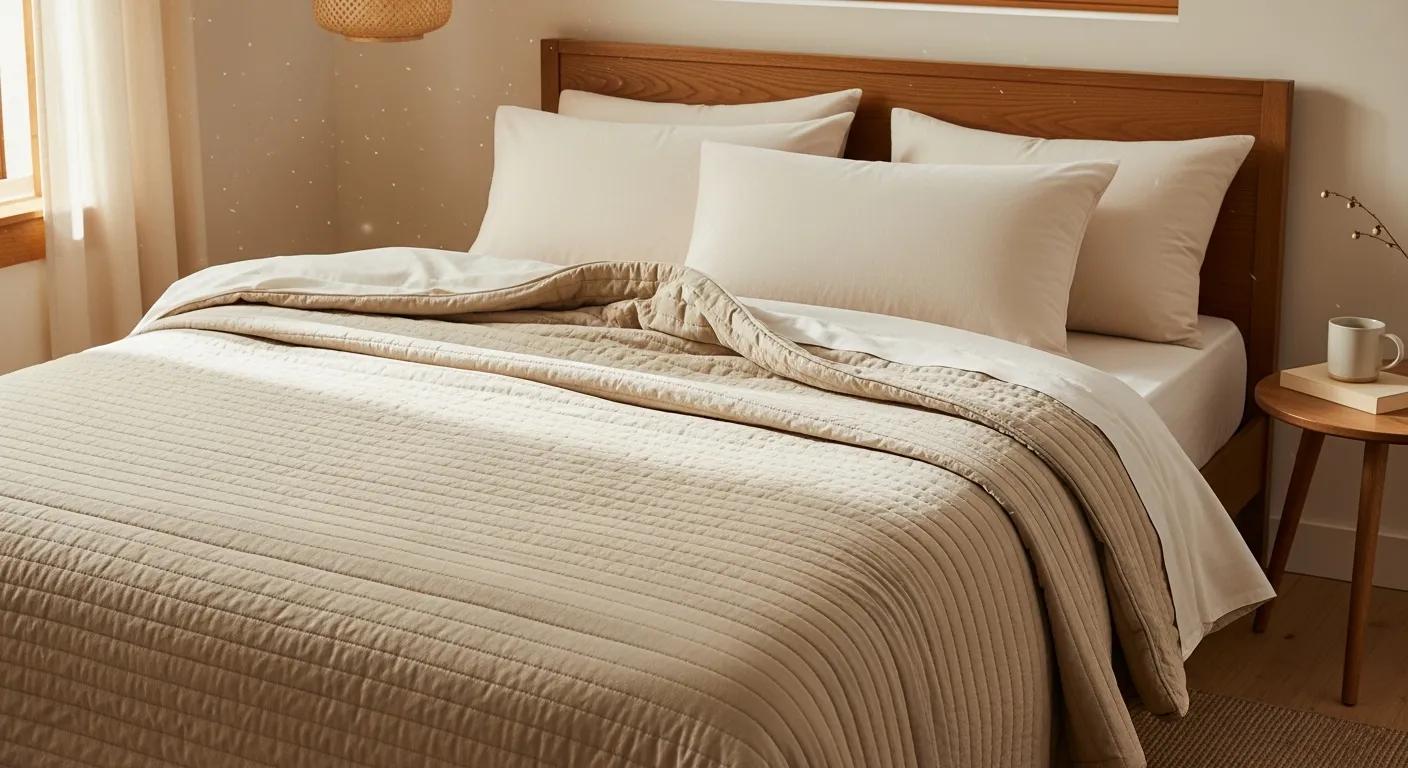
Soft bamboo quilts are filled and wrapped with fibres made from bamboo, engineered to help you sleep better by balancing the microclimate around your body, managing moisture and reducing common irritants. In this guide, we explain how bamboo quilt thermoregulation, the Coolweave™ fibre structure and strong moisture-wicking work together to promote deeper sleep and fewer night-time wake-ups. If you struggle with overheating, night sweats or itchy skin that breaks your sleep, a bamboo quilt can be a natural, breathable alternative that stays gentle on sensitive skin. You’ll learn how temperature control and hypoallergenic features translate into real comfort, why responsible production matters for eco-conscious shoppers, and practical tips for choosing and caring for a bamboo quilt. We cover temperature mechanics, allergy and eczema considerations, sustainability facts tied to ethical sourcing and biodegradability, plus buying and maintenance advice to keep your quilt soft and long-lasting. Throughout, we provide clear guidance so you can decide if an organic bamboo quilt is right for your sleep needs.
How Does Bamboo Quilt Temperature Regulation Improve Sleep Comfort?
Bamboo quilts help regulate sleep comfort by pairing breathable bamboo viscose fibres with a micro-channel structure that dissipates heat and encourages air exchange. That combination creates a cooler microclimate next to your skin, lowers surface humidity and helps keep skin temperature steady — all of which can speed sleep onset and reduce night-time wakings. Compared with many conventional fills, bamboo strikes a balance between thermal conductivity and lightweight insulation, so it feels comfortable across a range of bedroom temperatures. Knowing these material and structural differences explains why many sleepers notice improved sleep continuity with bamboo bedding.
This table compares Coolweave™/bamboo, cotton and Tencel across the core temperature-related attributes to show relative performance in everyday sleep conditions.
| Material | Temperature Regulation | Moisture Management |
|---|---|---|
| Coolweave™ / Bamboo | The micro-channel structure moves heat away quickly | High moisture-wicking; dries fast |
| Cotton | Moderate breathability; can hold heat when damp | Absorbs moisture but dries more slowly than bamboo |
| Tencel / Lyocell | Good thermoregulation; smooth, cool hand feel | Strong moisture transport; performance varies by weave |
The comparison shows Coolweave™-style bamboo constructions generally combine rapid heat dissipation with efficient moisture transport, supporting a drier sleep surface and better thermal comfort for many sleepers. That’s why hot sleepers often experience bamboo quilts as cooler than comparable cotton options.
What Is the Coolweave™ Structure and How Does It Enhance Breathability?

Coolweave™ is a fibre-and-weave approach that forms tiny gaps and channels inside the quilt fabric, allowing air and heat to pass through the material more quickly. Those micro-gaps act like small vents: body heat moves into the channels and is carried away by room air, which stops heat from pooling at the skin. Paired with the smooth feel of bamboo viscose, Coolweave™ increases breathability without losing softness or drape. That’s why bamboo quilts can feel silky and airy at once — cooling without any stiff or coarse texture.
How Does Moisture-Wicking Keep You Dry and Comfortable All Night?
Bamboo fibres draw moisture away from the skin and spread it across a larger surface, so evaporation happens faster than on dense fabrics. The process works in three steps: the fibre absorbs sweat from the skin; capillary action moves moisture through the fabric body; then airflow through Coolweave™ micro-channels helps it evaporate into the room. The result is less skin moisture, fewer swings in the microclimate and reduced disturbance for people prone to night sweats. For hot sleepers, that steadier, drier surface supports longer, uninterrupted sleep and fewer temperature-driven awakenings.
What Are the Hypoallergenic Benefits of Soft Bamboo Quilts?
Soft bamboo quilts offer hypoallergenic advantages because bamboo viscose fibres are naturally smooth, shed less and are less likely to trap dust, and some bamboo fabrics have antibacterial tendencies that can lower microbial load on bedding. These qualities reduce triggers like dust mite allergens and surface bacteria, which in turn can ease nasal and skin irritation at night. For allergy sufferers, the mix of reduced allergen attraction and better moisture control helps clearer breathing and fewer itch-related wake-ups. The next section explains how these properties benefit people with sensitive skin, eczema or dermatitis.
Before the product-focused details below, here’s a concise comparison table across bamboo, cotton and synthetic fills.
| Material | Dust Mite Resistance | Antibacterial Profile | Suitability for Sensitive Skin |
|---|---|---|---|
| Bamboo | Lower attraction thanks to a drier sleep surface | Natural antibacterial tendencies reported | High — smooth fibres reduce friction |
| Cotton | Moderate — retains moisture that can attract mites | Minimal natural antibacterial action | Good — breathable but may hold dampness |
| Synthetics | Variable — some trap heat and moisture | Often inert; some are treated for bacteria | Mixed — can trap heat and increase irritation |
This comparison highlights why bamboo quilts often outperform cotton and synthetic fills for sleepers prioritising hypoallergenic, gentle-on-skin characteristics.
Alongside these general material benefits, Adore Earth offers Australian-designed organic bamboo quilts described as exceptionally soft with a Coolweave™ structure. We are committed to your satisfaction and provide excellent service for all purchases across Australia — practical assurances that give buyers confidence while keeping the primary focus on the bedding benefits that reduce allergic triggers and improve night-time comfort.
How Do Bamboo Quilts Help Allergy Sufferers and Sensitive Skin?
Bamboo quilts help allergy sufferers by creating a drier, less welcoming environment for dust mites and by presenting a smooth fibre surface that minimises friction and irritation for sensitive skin. Less moisture retention means fewer mites and a lower mould risk, which reduces airborne and contact allergens overnight. Simple care — regular airing, gentle washing and using hypoallergenic covers — magnifies these natural benefits and extends the quilt’s allergen-reducing performance. For sensitive skin, the satin-like bamboo viscose surface reduces micro-abrasion compared with rougher fibres, helping skin stay calmer while you sleep.
Can Bamboo Quilts Provide Relief for Eczema and Dermatitis?
Bamboo quilts can help some people with eczema and dermatitis because their breathable, moisture-managing properties reduce sweat build-up and friction that often trigger flare-ups. The smooth bamboo viscose surface reduces mechanical irritation, and the ventilated structure stops heat building up — a common aggravator for inflamed skin. Individual responses do vary; if you have active or severe skin conditions, check with a clinician before changing bedding. Using fragrance-free detergents and gentle care routines preserves the fabric’s softness. With proper care and sensible layering, a bamboo quilt can help lower skin stress overnight.
Why Is Sustainable Bamboo Bedding a Smart Choice for Eco-Conscious Sleepers?

Organic bamboo bedding can be a smart option for eco-conscious sleepers because bamboo grows quickly, often needs fewer agricultural inputs and — when responsibly produced — can have a lower environmental footprint than many resource-intensive crops. Choosing organic bamboo reduces pesticide and fertiliser use, and biodegradable fibres shorten lifecycle impacts at disposal compared with many synthetic alternatives. For environmentally minded shoppers, thinking about the full lifecycle — cultivation, processing and end-of-life — helps you spot genuinely sustainable choices rather than assuming all bamboo products are equal. The next section outlines how organic bamboo cultivation supports these sustainability outcomes and how to prioritise ethical sourcing.
- Rapid Renewability: Bamboo regenerates quickly without replanting, easing land-use pressure.
- Lower Agrochemical Needs: Organic bamboo cultivation reduces pesticide and fertiliser inputs.
- Biodegradability: Natural bamboo fibres break down more readily than many synthetic alternatives.
When bamboo is sourced and processed ethically, these advantages mean bedding can lower environmental strain while delivering high performance. The following subsection explains how organic production supports these claims in practical terms.
How Does Organic Bamboo Production Support Environmental Sustainability?
Organic bamboo production supports sustainability through fast plant growth that produces high biomass per hectare, often using less water and fewer chemicals than conventional textile crops. That reduces agricultural runoff and soil degradation while making efficient use of land for fibre. Processing that uses closed-loop systems and solvent recovery further cuts chemical footprints versus conventional viscose methods. For consumers, choosing products that clearly state ethical sourcing and biodegradability helps align purchases with measurable environmental outcomes.
What Makes Adore Earth’s Bamboo Quilts Ethically and Biodegradably Superior?
Adore Earth presents its organic bamboo quilts as Australian-designed and made from 100% organic bamboo viscose, emphasising a silky-soft feel, a Coolweave™ structure for heat dissipation, and biodegradable materials as core benefits. Our product descriptions call out ethical sourcing and end-of-life considerations, and we are dedicated to ensuring customer satisfaction with every purchase across Australia. These company features show how sustainable practices can be built into product design while keeping comfort and durability at the forefront of mind.
How Do Bamboo Quilts Benefit Hot Sleepers and Regulate Body Temperature?
Yes — bamboo quilts help hot sleepers by combining airflow, effective moisture-wicking and lightweight insulation that moderates skin temperature without trapping heat. This mix reduces night sweats and creates a more consistent, drier surface that supports uninterrupted sleep. Bamboo’s breathability and Coolweave™ micro-channels allow constant air exchange, while smooth viscose fibres move moisture quickly from skin to fabric surface so it can evaporate. For sleepers who wake because of heat, choosing the right quilt weight and weave boosts these natural benefits.
- Choose a lightweight to mid-weight tog: Lighter fills increase airflow and cut heat retention.
- Prefer Coolweave™ or open-weave constructions: These speed ventilation and evaporation.
- Match bedding layers: Use breathable sheets and avoid heavy duvets in warm weather.
These tips help hot sleepers get the most from a bamboo quilt; the next subsection covers advantages for night sweats and warm climates.
Why Are Bamboo Quilts Ideal for Night Sweats and Warm Climates?
Bamboo quilts excel for night sweats because they draw moisture away from the skin into the fabric body and then let it evaporate through the quilt’s ventilated structure, cutting the sticky, clammy feeling of sweat. In warm climates, the lightweight drape and airy weave give better convective cooling than dense or heavily insulated fills. User reports and practical experience show that bamboo constructions can lower perceived skin temperature and reduce overheating interruptions. If you suffer from chronic night sweats, pairing a bamboo quilt with moisture-wicking sheets and a cooler room temperature gives the best results.
How Does Natural Thermoregulation Provide Year-Round Comfort?
Bamboo quilts offer year-round comfort because the material insulates when it’s cool and breathes when it’s warm, buffering you against extreme thermal swings. The same moisture-management that cools you in summer helps move body heat in cooler months when you use sensible layering. Pair a bamboo quilt with a light blanket in winter or use it alone in summer — thoughtful tog selection and bedding combinations extend the quilt’s usefulness across seasons.
What Should You Know About Choosing and Caring for Your Bamboo Quilt?
Choosing and caring for a bamboo quilt means matching size and tog to your bed and climate, and following gentle wash and storage habits to preserve softness and lifespan. Good selection balances drape, overhang and intended use while care routines reduce fibre wear and protect the Coolweave™ structure that supports breathability. Below is a compact reference table with size guidance and recommended care actions to simplify buying and stewardship decisions. After the table, we provide practical washing and storage tips to keep your quilt feeling its best.
| Item | Characteristic | Recommended Action |
|---|---|---|
| Single/Single size | Standard single-bed coverage | Choose a slight overhang for tucking or an exact fit for minimal drape |
| Double/Queen size | Coverage for couples or larger single beds | Opt for a larger size for extra drape and flexible insulation control |
| Care step | Fabric-friendly maintenance | Wash gently, use mild detergent, line-dry when possible to preserve fibres |
The table turns common-size and care questions into clear actions that extend quilt life and comfort. The following subsections offer more detailed selection and care instructions.
How to Select the Right Bamboo Quilt Size for Your Bed?
Choosing the right quilt size depends on your mattress dimensions, preferred overhang and whether you share the bed. A slightly larger quilt gives extra drape for tucking, while a closer fit limits floor contact. For a neat look and full coverage, pick a quilt that provides about 10–20 cm of overhang on each side for standard beds — that’s enough for layering and tucking without excess fabric dragging. Think about how you sleep: side sleepers often like more drape, so round up if you prefer more cover. These practical choices ensure the quilt performs as you expect.
What Are the Best Care Practices to Maintain Softness and Durability?
Gentle washing, mild detergent and low-heat or line-drying preserve bamboo viscose softness and the Coolweave™ channels that enable breathability, preventing premature fibre collapse. Avoid bleach and fabric softeners, which can coat fibres and reduce moisture transport; use a neutral pH detergent and a gentle machine cycle if needed. Line-dry when possible, or tumble-dry on low with tennis balls to redistribute the fill and keep loft without stressing fibres. Store quilts in breathable bags to avoid moisture buildup and pests, and air them regularly between washes to refresh the fabric and extend their useful life.
Adore Earth’s range includes organic bamboo quilts that follow these selection and care recommendations — product pages list sizes and tog options to help you pick the right configuration for your bed. Mentioning Adore Earth here points you to options that match this guidance while keeping the focus on selection criteria and care best practices.
What Are Common Questions About Bamboo Quilts and Their Sleep Benefits?
This section answers common buyer questions with short Q&A pairs so you can quickly decide if a bamboo quilt meets your needs. Each answer focuses on practical differences and decision factors like breathability, longevity and maintenance, linking back to earlier sections for more detail. The two questions below address the most frequent comparisons and durability concerns.
Are Bamboo Quilts Better Than Cotton Quilts for Sleep Quality?
Bamboo quilts often outperform cotton quilts when breathability and moisture-wicking matter, because bamboo viscose usually moves moisture faster and pairs well with ventilated weaves to keep skin drier. Cotton is still comfortable and familiar — particularly in cooler, dry climates — but it can hold dampness longer than bamboo, which may interrupt sleep for hot or sweating sleepers. Value and personal preference play a role: cotton can be a more budget-friendly option in some markets, while bamboo offers a silky feel and natural thermoregulation. If cooling and hypoallergenic traits are your priority, bamboo is often the better choice.
How Long Do Bamboo Quilts Last Compared to Other Materials?
Bamboo quilts can last as long as well-made cotton quilts when cared for correctly; lifespan depends on fill quality, weave strength and maintenance rather than fibre alone. With gentle washing, careful drying and correct storage, a high-quality bamboo quilt can stay comfortable for several years. Heavy use or harsh laundering will shorten the lifespan. Look to replace when the loft is flattened, breathability is reduced, or persistent odour and fabric thinning appear. Regular care and following manufacturer guidance help maximise longevity and performance.
If you’re ready to try organic bamboo bedding, Adore Earth offers Australian-designed quilts made from 100% organic bamboo viscose, focusing on silky softness, Coolweave™ heat dissipation and sustainable materials. We are dedicated to ensuring customer satisfaction with every purchase across Australia — a low-friction way to see if a bamboo quilt improves your sleep. These brand assurances complement the practical guidance above and give a clear next step for shoppers who care about comfort and sustainability.
Frequently Asked Questions
What are the environmental benefits of choosing bamboo quilts over synthetic options?
Bamboo quilts have clear environmental advantages over many synthetic options. Bamboo is a fast-renewing resource that typically needs less water and fewer pesticides to grow. Bamboo fibres are biodegradable, so they reduce long-term landfill impact compared with synthetic materials that can persist and contribute to microplastic pollution. Choosing bamboo helps eco-conscious consumers support more sustainable practices while still enjoying comfortable, high-quality bedding.
How do I properly store my bamboo quilt to maintain its quality?
Store your bamboo quilt in a cool, dry place out of direct sunlight. Use breathable storage bags to avoid trapping moisture and to protect against pests. Don’t compress the quilt tightly — that can damage fibres and reduce loft. Regularly airing the quilt between uses keeps it fresh and helps prolong its lifespan. These simple storage steps will keep your quilt soft and comfortable for years.
Can bamboo quilts help with temperature regulation in different seasons?
Yes — bamboo quilts are designed for year-round temperature regulation. In warmer months, their breathable structure and moisture-wicking properties keep you cool and dry; in colder months, they provide lightweight insulation to retain warmth. This versatility makes bamboo quilts suitable across climates. Layer sensibly — lighter blankets in summer and heavier ones in winter — to maximise the thermoregulating benefits.
Are there specific care instructions for maintaining the hypoallergenic properties of bamboo quilts?
To preserve the hypoallergenic qualities of your bamboo quilt, wash it gently with a mild, fragrance-free detergent. Avoid bleach and fabric softeners because they can coat fibres and reduce moisture-wicking and antibacterial tendencies. Line-drying is preferable; if you use a dryer, choose a low heat setting. Regular airing and gentle washing will keep the quilt soft and help maintain its hypoallergenic features for allergy sufferers.
What should I consider when choosing the right tog rating for my bamboo quilt?
Pick a tog rating based on your comfort preferences, local climate and sleeping habits. Lower to moderate togs (around 4.5–7.5) suit warmer climates and hot sleepers, while higher togs (10.5–13.5) offer more warmth for cooler conditions. Think about layering too — a lighter tog in summer and a heavier one in winter gives the most flexibility and comfort throughout the year.
How do bamboo quilts compare to other materials in terms of durability?
Bamboo quilts can be as durable as well-made cotton quilts when properly cared for. Longevity comes down to fibre quality, weave strength and how you maintain the quilt. With gentle washing, correct drying and sensible storage, a bamboo quilt can last for several years. Signs it’s time to replace include flattened loft, reduced breathability or persistent odour. Regular care helps you get the most life and performance from your quilt.
