




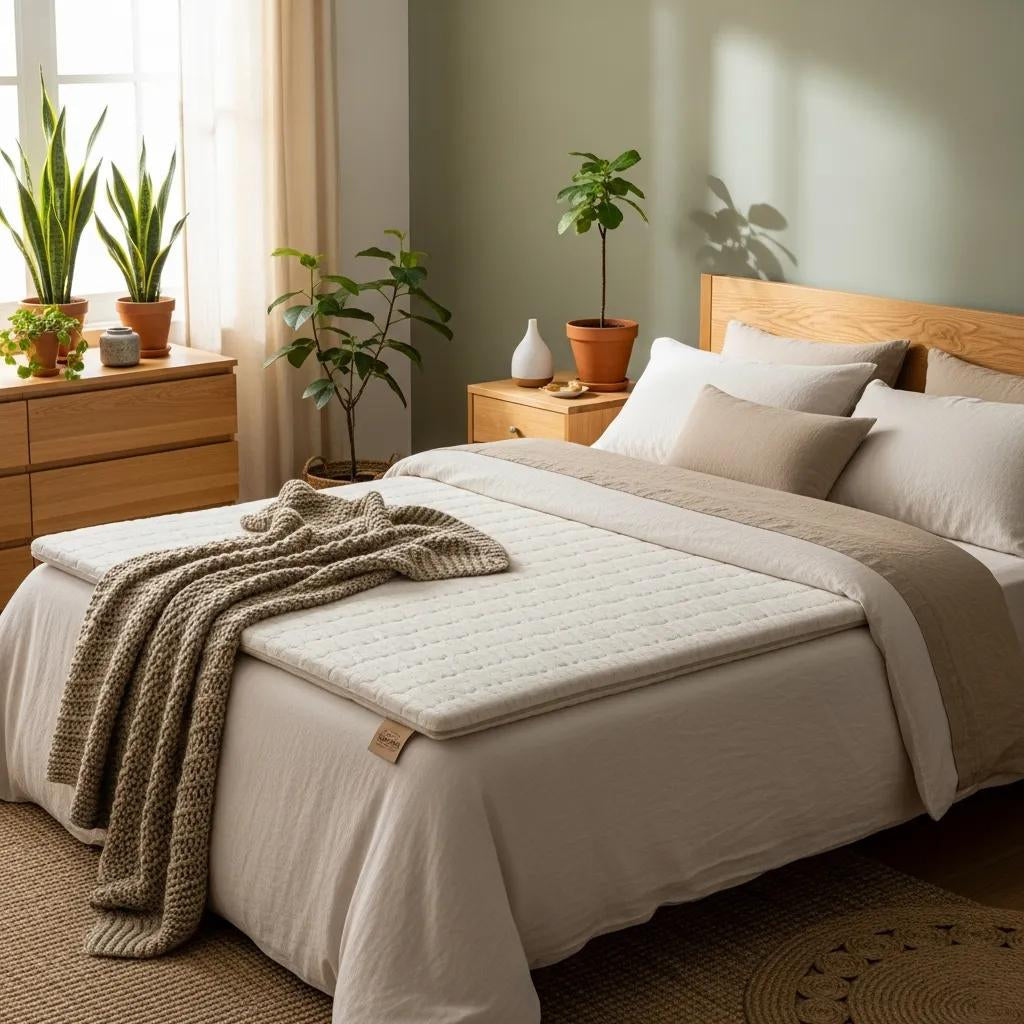
Why choosing an eco-friendly mattress topper makes sense today — benefits and options for Australian homes
Eco-friendly mattress toppers are slim, removable layers made from renewable or low-toxicity materials that make your bed comfier while cutting environmental impact. A sustainable topper brings immediate wins — fresher indoor air, fewer allergens and better temperature control — and often a lower resource footprint over its lifetime compared to disposable or heavily treated alternatives. This guide explains how eco toppers work, which natural materials suit Australian bedrooms, and practical steps to improve sleep and household health. You’ll find clear buying criteria, the trade-offs between bamboo, latex, wool and cotton, and straightforward care tips to get the best long-term value. We also show how to check eco-credentials, read performance claims critically, and balance initial investment against durability for a natural mattress topper that offers great value. Finally, we cover manufacturer practices worth watching and how features like breathable weaves and hypoallergenic covers translate into real benefits for Australian homes.
What are the main benefits of eco‑friendly mattress toppers for Australian homes?
An eco-friendly mattress topper improves comfort by using natural or low‑VOC materials and breathable construction, which reduces chemical exposure while helping regulate surface temperature. The idea is simple: renewable fibres and natural fillings wick moisture, make beds less attractive to dust mites and avoid flame‑retardant finishes that can release VOCs — all of which can measurably improve indoor air quality and reduce allergen load. For Australian households, where seasonal humidity and regular heating are common, breathability and non‑toxic finishes really matter for respiratory comfort. Long‑term value also comes from durability and biodegradability; sustainable toppers often offer better long-term value than synthetic alternatives that need frequent replacing. Knowing these benefits makes it easier to match material choice to your bedroom conditions and health priorities.
Eco-friendly toppers deliver a few clear advantages:
- Environmental gains: renewable materials reduce reliance on petrochemicals and cut landfill waste.
- Health improvements: hypoallergenic, low‑chemical fabrics and fillings lower VOC exposure and allergen triggers.
- Comfort & temperature control: breathable weaves and moisture‑wicking fibres help stabilise sleep temperature.
- Durability and value: longer service life means fewer replacements and better cost‑per‑year.
Together, these benefits make a sustainable topper a practical upgrade for Australian bedrooms. The next section explains how bamboo and other materials achieve these outcomes.
How do organic bamboo mattress toppers improve comfort and sleep?

Organic bamboo toppers pair a silky, soft surface with a breathable fibre structure that moves heat and moisture away from the body. Bamboo naturally absorbs and releases humidity, so it helps prevent that sticky, clammy feeling on warm nights and keeps skin temperature steadier across the seasons. Because the fabric is finer than many cottons, it feels smoother without adding thick insulation that traps heat. In practice, many people find nights feel cooler and less disrupted — particularly in homes with background heating or during hotter months.
Bamboo’s textiles are a good match for sleepers who overheat, sweat, or prefer a gentle, conforming surface rather than a heavy, insulated layer. The next section looks at the health benefits that come from non‑toxic and hypoallergenic construction.
What health advantages do non-toxic, hypoallergenic toppers offer?
Non‑toxic, hypoallergenic toppers reduce exposure to volatile organic compounds (VOCs), synthetic flame retardants and harsh chemical finishes that can worsen respiratory and skin conditions. Natural fibres such as organic bamboo often have moisture‑managing and antibacterial properties that make dust‑mite growth and microbial activity less likely, lowering allergen levels in the bed. For people with eczema, asthma or chemical sensitivities, a low‑chemical topper can cut night‑time irritation and improve sleep by reducing triggers that cause coughing or itching. Simple maintenance — regular airing, using a mattress protector and following the manufacturer’s washing guidance — keeps these benefits working over time.
Reducing chemical and allergen exposure is a sensible first move. The section below compares common sustainable materials so you can pick the best fit for your needs.
Which sustainable materials are used in eco‑friendly mattress toppers?

Sustainable toppers use a range of renewable or low‑impact materials, each with its own comfort, care and environmental profile. Popular choices include organic bamboo, natural latex, sheep’s wool, organic cotton and lyocell/Tencel. Each material balances breathability, biodegradability and maintenance in different ways, so you might prioritise attributes like cooling performance, resilient support or easy washing. Understanding these trade‑offs helps you match a topper to your sleeping style and sustainability goals.
Typical strengths and limitations:
- Organic bamboo: very breathable and soft with strong moisture‑wicking properties.
- Natural latex: springy and supportive with excellent durability and natural resilience.
- Wool: naturally temperature‑regulating and flame‑resistant, but needs gentler laundering.
- Organic cotton: familiar feel and easy care, though heavier and less cooling than bamboo.
- Lyocell/Tencel: made from wood pulp with strong moisture control and a smooth finish.
Below is a concise comparison of environmental and practical attributes to help you decide.
Different sustainable topper materials vary in production impact and care needs.
| Material | Environmental/sourcing note | Practical care & biodegradability |
|---|---|---|
| Organic bamboo | Fast‑growing, renewable fibre; lower pesticide need when certified | Removable covers are often machine‑washable; fibres are biodegradable in appropriate composting conditions |
| Natural latex (organic) | Tapped from rubber trees; renewable, though the processing energy varies | Very durable; cores are not usually machine‑washable; natural latex biodegrades if unblended |
| Wool (organic/sustainably sourced) | Renewable animal fibre; footprint linked to land management | Naturally flame‑resistant; spot clean or specialist wash; biodegradable |
| Organic cotton | Widely grown; organic cuts pesticide use, but can use more water | Easy to launder; biodegradable when not blended with synthetics |
That comparison should make it easier to match materials with your eco priorities and everyday care needs. The next section explains why bamboo often stands out against latex and wool.
Why choose organic bamboo over latex or wool for a topper?
Bamboo is a popular choice because it blends a soft, smooth hand‑feel with strong breathability and low allergen potential, all sourced from a fast‑renewing plant. Its fine fibres feel smoother than many cottons and tend to wick moisture more effectively than wool in humid conditions, which suits damp or changeable Australian climates. Natural latex gives stronger contouring support and longer-term durability, while wool brings warmth and natural flame resistance, but can feel thicker and need more careful care. For many Australian bedrooms, bamboo offers a practical middle ground: cooling comfort, surface softness and straightforward upkeep.
Your choice depends on sleep priorities: choose bamboo for cooling and low allergy risk; latex for resilient support and longevity; or wool for natural insulation in a cooler room. The following subsection looks at lifecycle environmental impacts across these options.
How do sustainable topper materials affect the environment?
Material impact depends on water and land use, chemical inputs, manufacturing emissions and end‑of‑life disposal. Bamboo generally scores well for renewability and fast growth, though processing methods vary. Lyocell/Tencel uses a closed‑loop solvent process that reduces emissions, while organic cotton reduces pesticides but can demand significant water. Natural latex can support carbon sequestration when rubber tree cultivation is managed responsibly, and wool’s footprint is influenced by livestock and land use. End‑of‑life matters: natural toppers that are not blended with synthetics can be composted or biodegrade, lowering landfill impact versus synthetic foam cores.
| Material | Water/chemical footprint | End‑of‑life |
|---|---|---|
| Bamboo (processed) | Moderate — depends on processing method | Biodegradable if unblended with synthetics |
| Organic latex | Low to moderate | Biodegradable, where natural and unblended |
| Wool | Moderate (driven by animal land use) | Biodegradable and recyclable within textiles |
| Organic cotton | Higher water use, lower chemical load | Biodegradable when pure |
Keeping these metrics in mind helps you make choices that stretch a topper’s useful life and maximise sustainability. Next, we look at brand and quality features to watch for.
How does Adore Earth ensure quality and sustainability in its bamboo toppers?
At Adore Earth, we focus on organic bamboo bedding designed for sustainable comfort and practical customer reassurance. Our approach highlights biodegradable bamboo fabrics, a soft hand feel, hypoallergenic and antibacterial properties, and a breathable structure that helps regulate temperature. We back products with a commitment to customer satisfaction and designs that resist pet hair and promote easy care. For shoppers, these features signal the priorities we hear most often: low‑chemical composition, reliable temperature control and flexible policies so you can try products in your own home.
What certifications and ethical sourcing practices support Adore Earth products?
Third‑party marks such as GOTS (Global Organic Textile Standard) and Oeko‑Tex Standard 100 are useful indicators of organic fibre content and low chemical residues, though brands vary in which badges they use. GOTS covers organic farming and environmentally responsible processing, while Oeko‑Tex checks for restricted substances and VOC residues in textiles. Ethical sourcing also includes traceable supply chains, transparent manufacturing partners and a clear commitment to renewable fibres with reduced pesticide or solvent use. Adore Earth highlights organic bamboo and sustainable design choices in our product messaging, and we recommend shoppers look for clear certification statements and supply transparency when they compare brands.
How do temperature control and durability add value to bamboo toppers?
Bamboo’s moisture‑wicking fibres and open fabric structure help move heat away from the sleeper, reducing night‑time overheating and improving sleep continuity. Durability is a sustainability win too: a well‑made bamboo topper with reinforced stitching and solid edge binding resists thinning and compression, giving more years of use and a lower cost‑per‑year. Simple care — regular airing, a mattress protector and following washing instructions for removable covers — preserves structure and keeps performance high. Thinking about durability as part of sustainability helps buyers pick toppers that deliver comfort and long-term value.
What should Australian shoppers consider when choosing an affordable natural topper?
When you’re shopping for your home, weigh fit, material suitability, eco‑certifications, expected durability and retailer policies regarding customer satisfaction and delivery. Fit means checking dimensions and whether the topper stays securely on your mattress. Material suitability depends on whether you need cooling, extra cushioning or more warmth. Certifications (for example, GOTS or Oeko‑Tex) reduce chemical risk, while clear satisfaction policies help reduce purchase uncertainty and help set realistic lifespan expectations. Considering the investment against expected years of use gives a practical long-term value that often makes higher‑quality natural toppers a smart investment.
- Measure fit and depth: Confirm the topper matches your mattress size and stays put during sleep.
- Match material to needs: Bamboo for cooling, latex for support, wool for insulation.
- Check certifications: Ask to see GOTS, Oeko‑Tex or equivalent documentation.
- Review customer satisfaction policies: Look for clear policies that allow you to try products with confidence.
- Consider long-term value: Think about the expected lifespan to understand the true value over time.
This checklist clarifies priorities and feeds into a compact value‑and‑availability comparison below.
| Topper option | Value for money | Durability/comfort | Delivery & notes |
|---|---|---|---|
| Bamboo mattress pad | Excellent value; soft surface | 3–6 years; cooling top layer | Check the retailer's delivery and satisfaction policies |
| Natural latex topper | Premium investment | 6–10 years; strong support and resilience | May have specific delivery requirements |
| Wool topper | Good value | 4–8 years; warm yet breathable | Follow care guidance; some items may need professional cleaning |
| Organic cotton topper | Affordable option | 2–5 years; familiar, comfortable feel | Often easy to care for; check for pure fibre content |
Finding the best value means balancing initial investment, expected lifespan and the eco‑features that matter to you. Some brands, including Adore Earth, emphasise organic bamboo and strong commitments to customer satisfaction as part of their value offering.
How to judge price, quality and eco features in mattress toppers
Combine objective checks — material composition, stitch quality, fill density — with subjective measures like how the topper feels for you in a trial. Verify fibre origin and any third‑party certification, then look at construction details such as edge binding and removable, washable covers. Rather than focusing only on the initial cost, consider the investment against expected longevity to understand the long-term value. Read verified customer reviews for real‑world wear reports and ask sellers specific questions about chemical finishes and care instructions before you buy.
A simple scoring framework helps compare options:
- Material (0–5): renewable sourcing, breathability
- Construction (0–5): cover, edge binding, ease of care
- Certifications (0–5): presence and credibility
- Value (0–5): long-term value and customer satisfaction policies
A short checklist or scorecard makes comparisons more objective and highlights the attributes most relevant to Australian bedrooms, such as cooling performance and low‑chemical finishes.
Where to buy reliable, eco‑friendly toppers with Australian delivery and support?
When shopping for your home, check retailer policy pages for clear policies on customer satisfaction and support, and make sure product descriptions list fibre breakdowns and certification notes. Prefer suppliers that publish care instructions and supply‑chain transparency so you can verify claims about organic fibres or low‑VOC processing. Long‑form product reviews that describe performance over several seasons are especially helpful for judging durability. Some brands specialise in Australian‑designed bamboo bedding and offer strong customer commitments, so shoppers should confirm local delivery, customer support, and satisfaction policies before committing.
- Check product pages for clear fibre percentages and care instructions.
- Look for certification logos and verify them in product documentation.
- Read long reviews for wear and comfort feedback across seasons.
These steps reduce risk and help you choose a topper that meets both sustainability and service expectations.
How do eco‑friendly toppers contribute to a healthier home?
Eco‑friendly mattress toppers help create a healthier home by cutting exposure to VOCs and chemical residues, reducing dust‑mite prevalence and improving surface hygiene thanks to breathable, antibacterial fibres. The link is straightforward: low‑VOC textiles reduce airborne irritants, moisture‑wicking materials lower humidity that helps dust mites thrive, and hypoallergenic surfaces reduce contact allergens. Together, these changes can improve indoor air quality and respiratory comfort — especially in homes with regular heating and limited ventilation. Simple actions — regular airing, a mattress protector and choosing non‑toxic finishes — amplify these health benefits.
The table below links common health attributes to the mechanisms that produce measurable home benefits.
| Health attribute | Mechanism | Measurable benefit |
|---|---|---|
| Hypoallergenic fibres | Make surfaces less attractive to dust mites | Lower allergen counts and fewer allergic reactions |
| Anti‑bacterial surfaces | Natural fibre properties or safe treatments limit microbes | Reduced microbial growth on the sleep surface |
| VOC‑free materials | Absence of chemical finishes | Improved indoor air quality and less irritation |
| Breathable weaves | Moisture‑wicking and airflow | Fewer damp spots and lower dust mite survival |
Choosing the right topper is a practical part of a wider healthy‑home approach. The next section explains how bamboo toppers specifically help indoor air quality.
How do bamboo toppers improve indoor air quality and reduce allergens?
Bamboo toppers support indoor air quality by avoiding chemical finishes that can emit VOCs and by offering a naturally antibacterial, moisture‑managing surface that discourages dust mites and microbial growth. The fibre’s wicking action moves sweat and humidity away from the skin and into outer layers, creating a drier surface that’s less hospitable to common allergens. Used with routine cleaning and a breathable mattress protector, bamboo toppers can reduce airborne irritants and surface allergen reservoirs, which helps sensitive sleepers breathe easier.
Keeping these benefits requires straightforward care — airing, spot‑cleaning and following washing guidance — which protects both hygiene and material performance.
Why are non‑toxic toppers important for sensitive skin and allergy sufferers?
Non‑toxic toppers matter because many skin and respiratory reactions are triggered by residual chemicals, flame retardants and VOCs in conventional bedding. Choosing toppers made from organic or certified fibres with minimal chemical processing reduces the risk of contact dermatitis, skin redness and breathing irritation. Look for certification marks and wash new bedding before use to remove any manufacturing residues. Picking non‑toxic toppers is a frontline, practical step to cut nightly exposure to irritants and improve sleep for allergy sufferers.
These selection and care steps support a healthier sleep environment. If you want product suggestions, exploring reputable bamboo bedding ranges is a sensible next step.
If you’re ready to shop, Adore Earth specialises in organic bamboo bedding designed for comfort, care and conservation. We offer temperature‑regulating bamboo toppers with hypoallergenic and antibacterial properties, backed by a commitment to customer satisfaction, so you can try products in your own home. This mention is intended to help connect the buying guidance above with available product features.
Frequently asked questions
1. How should I care for my eco‑friendly mattress topper?
Follow the manufacturer’s care instructions, but in general: air the topper regularly to avoid moisture build‑up and smells; wash removable covers on a gentle machine cycle if allowed; spot‑clean stains with mild detergent; and use a mattress protector to shield against spills and allergens. These simple steps extend life and performance.
2. Are eco‑friendly toppers suitable for all sleeper types?
Yes, there are eco toppers for different sleeping styles. Bamboo gives a soft, breathable surface for those who overheat. Natural latex provides pressure relief and support for side or heavier sleepers. Wool adds warmth and natural regulation for cooler rooms. Pick the material that best matches your comfort needs and sleeping position.
3. What eco‑certifications should I look for when buying a topper?
Look for GOTS (Global Organic Textile Standard) and Oeko‑Tex Standard 100 as starting points. GOTS covers organic fibre sourcing and environmentally responsible processing; Oeko‑Tex checks for restricted substances and chemical residues. These certifications give confidence that a product meets recognised environmental and safety standards.
4. How can I tell if a topper is genuinely eco‑friendly?
Check for third‑party certifications like GOTS or Oeko‑Tex, review the material breakdown and ask about sourcing and manufacturing transparency. Brands that publish supply‑chain information and clear care instructions are more likely to be genuine. Verified customer reviews can also reveal whether products live up to eco claims over time.
5. Can eco‑friendly toppers help with allergies?
Yes. Many eco toppers use hypoallergenic materials that resist dust mites and microbes — for example, bamboo and wool have natural properties that limit microbial growth, and low‑chemical finishes reduce VOC exposure. Choosing a topper that’s designed to minimise allergens can improve sleep for people with sensitivities.
6. What lifespan can I expect from an eco‑friendly topper?
Lifespan varies by material and use, but expect roughly 3–10 years. Natural latex tends to last longest (up to around 10 years), while bamboo and wool commonly last 3–6 years with good care. Regular airing and following washing guidance will help extend usable life.
7. Which brands make high‑quality eco toppers?
Several brands focus on sustainable, non‑toxic toppers. Adore Earth specialises in organic bamboo bedding with a focus on comfort and eco credentials. Other reputable names include Avocado Green Mattress and Naturepedic, which offer organic and low‑chemical options. When choosing a brand, check certifications, read verified reviews and look for transparent sourcing and manufacturing information.
