




Why choose bamboo sheets? Greener bedding that’s soft, breathable and built to last
Bamboo sheets pair a fast‑growing plant fibre with a silky, cool feel — an easy way to make your bedroom more sustainable without sacrificing comfort. Below, we explain why organic bamboo is widely seen as an eco‑friendlier bedding choice, how it performs for sleep, and what happens from field to disposal. You’ll find clear comparisons with conventional cotton on water use and pesticides, practical tips for washing and end‑of‑life choices, and a breakdown of the sourcing and supply‑chain factors that matter when buying sustainable textiles. Our goal is simple: give you useful information so you can choose bedding that’s kinder to the planet and better for your sleep.
What makes bamboo sheets an eco-friendly choice?

Bamboo is a low‑input crop: it regrows quickly, typically needs little irrigation, and—when grown organically—avoids synthetic pesticides. Those traits reduce the resource demands and chemical burden compared with many conventional fibres. Bamboo’s dense root systems also help hold soil in place and store carbon, making it useful for restoring landscapes. The net effect: bedding made from organic bamboo can show a smaller environmental footprint across water use, chemical load and biodegradability. Below is a concise comparison to make those differences easy to scan.
| Attribute | Organic Bamboo | Conventional Cotton |
|---|---|---|
| Typical irrigation needs | Low — largely rainfed | High — often irrigated extensively |
| Pesticide use | Minimal to none (organic) | High — frequency pesticide/fertiliser application |
| Regeneration rate | Rapid natural regrowth without replanting | Slower, requires replanting |
| Carbon sequestration | Strong on a per-hectare basis | Lower per comparable area |
This compact comparison shows why many eco‑minded bedding brands favour organic bamboo: it typically uses less water, avoids heavy pesticide loads, and makes efficient use of land. Those baseline differences help when you’re checking sustainability labels and lifecycle claims for natural fibre bed linen.
How does organic bamboo support greener living?
Organic bamboo reduces reliance on synthetic pesticides and usually needs less irrigation, which protects soil and nearby waterways. Because bamboo regrows from the same rootstock, it limits soil disturbance and reduces pressure to convert new land for crops. For shoppers, that translates into bedding that aligns with lower chemical exposure, a smaller agricultural water footprint, and biodegradable end‑of‑life options, making organic bamboo a leading option among eco‑friendly bedding materials.
How does bamboo cultivation compare to cotton environmentally?
Bamboo generally requires less irrigation per kilogram of fibre and—when grown organically—avoids the intense pesticide and fertiliser use common in conventional cotton farming. Bamboo’s fast biomass growth also boosts its short‑term carbon sequestration potential per hectare. When lifecycle assessments account for water, chemicals and soil impacts, organic bamboo often shows lower embodied environmental costs than conventional cotton. That’s why terms like “carbon‑neutral bamboo sheets” or certified sustainable textiles often focus on these production advantages.
How do bamboo sheets improve comfort and health?

Bamboo sheets combine a fine, smooth fibre with natural breathability and moisture management. A tight but airy weave (like Coolweave™ constructions) lets air flow while wicking sweat away from skin, creating a cooler sleep surface. Bamboo also tends to resist bacteria and dust‑mite buildup, which can lower allergy triggers, and its soft surface reduces friction on sensitive skin. The result is bedding that supports better sleep and feels gentle on the body—without trading off sustainability.
- Softness & drape: Bamboo creates a smooth, silky surface that reduces skin abrasion and feels luxurious.
- Temperature regulation: Breathable weave and wicking help manage night sweats for a cooler night.
- Hypoallergenic: Natural antibacterial tendencies and tight weaves lower dust‑mite and allergen buildup.
Those benefits make organic bamboo sheets a top pick if you want hypoallergenic or temperature‑regulating bedding that’s also environmentally considerate.
How do bamboo sheets deliver hypoallergenic and temperature benefits?
Bamboo’s fine filament and engineered weaves (for example, Coolweave™) combine to wick moisture and boost airflow without losing softness. Removing surface moisture reduces bacterial growth and common allergy triggers, helping sensitive sleepers breathe easier and stay drier. Many sleepers notice fewer night sweats and a cooler feel because bamboo moves humidity away from the body more effectively than denser fabrics.
Are bamboo sheets good for sensitive skin and allergies?
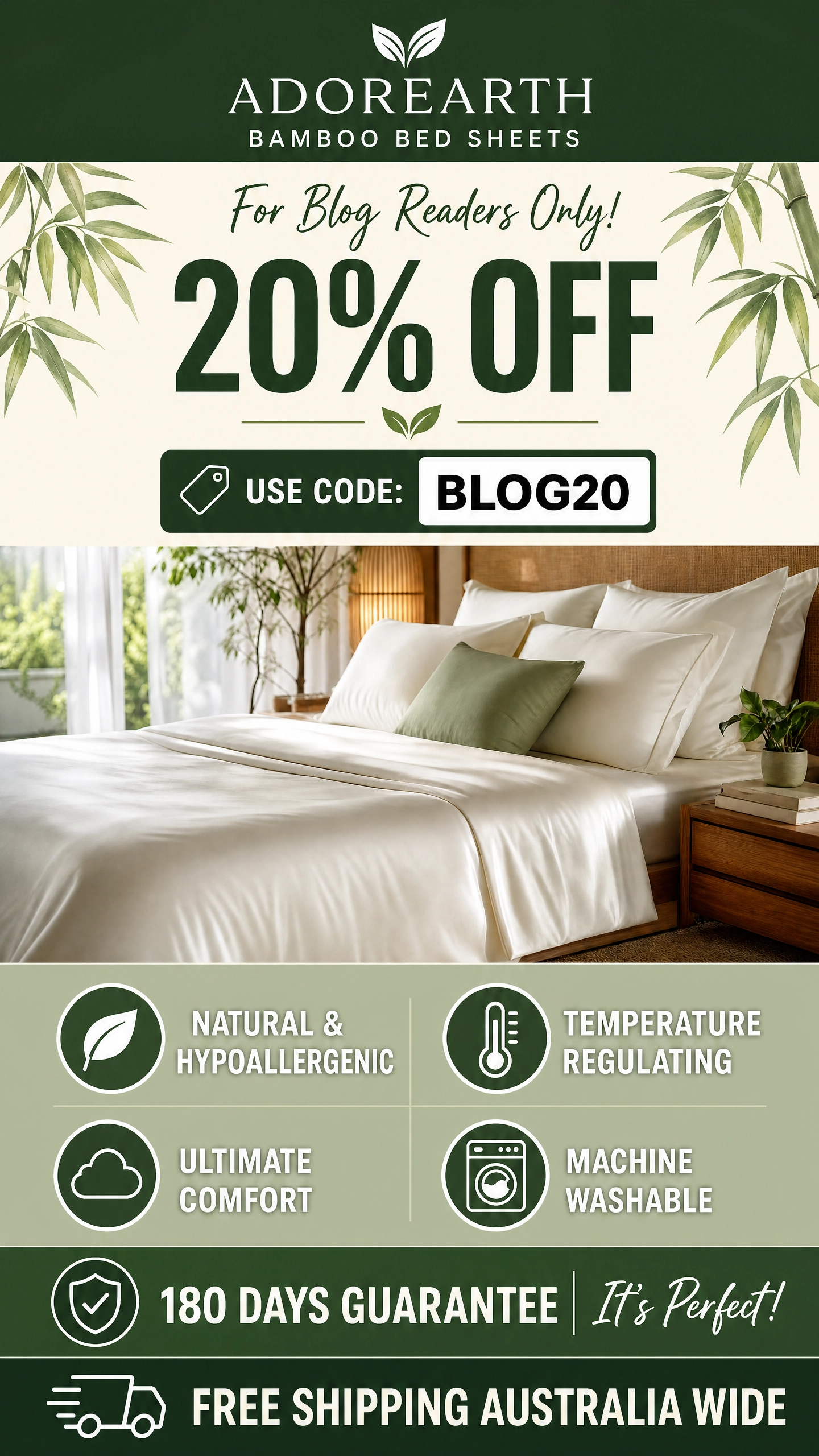
Yes. Bamboo fibres are naturally smooth and, when processed without harsh chemicals, don’t leave irritating residues. That makes them a good option for people with eczema or dermatitis. The antibacterial and dust‑mite resistant qualities of tightly woven bamboo bedding reduce common allergens during sleep, improving respiratory comfort for allergy sufferers. To keep these benefits, follow gentle washing and drying practices—mild detergents and careful drying help preserve the fibre surface and the hypoallergenic performance. At Adore Earth, we offer Australian‑designed, 100% organic bamboo bedding that highlights these qualities: softness, hypoallergenic performance, antibacterial and dust‑mite resistance, Coolweave™ temperature regulation and a tight weave that resists pet hair. We stand by our products with customer-friendly policies, so you can choose with confidence.
What is Adore Earth’s commitment to sustainable, ethical bamboo bedding?
Adore Earth focuses on ethically sourced, 100% organic bamboo bedding designed in Australia with sustainability front of mind. We prioritise biodegradability, reduced water use, and pesticide‑free raw materials. At the same time, we aim to deliver high comfort and durability: hypoallergenic performance, antibacterial benefits, Coolweave™ temperature regulation and a tight weave that keeps pet hair at bay. Together, these elements reflect our goal to offer stylish, eco‑friendly home products backed by customer-friendly policies.
How does Adore Earth ensure ethical sourcing and organic standards?
Our product messaging centres on ethically sourced organic bamboo and Australian design. We highlight organic raw materials and sourcing practices that avoid harmful pesticides and support safer working conditions. That connection—between better raw‑material choices and lower chemical exposure, healthier soils and cleaner waterways—is central to our sustainability story. While specific third‑party certifications depend on product lines, we aim to be transparent about sourcing and to help customers choose natural fibre bedding that matches their environmental values.
What customer guarantees and sustainability practices does Adore Earth offer?
To make sustainable buying easier, Adore Earth offers customer-friendly policies that reduce purchase friction and encourage longer‑lasting choices instead of quick replacements. We also highlight practical product features—hypoallergenic, antibacterial, Coolweave™ temperature regulation and pet‑hair resistant weaves—so customers can see how sustainable bedding works in everyday life.
How do bamboo sheets reduce your bedroom's environmental impact?
Bamboo sheets can lower your bedroom’s footprint by reducing the water and chemical burden in production, cutting laundering energy through durable fibres, and offering biodegradable end‑of‑life options. A lifecycle view matters: growth, processing, manufacturing, use and disposal together determine the overall impact. In real terms, choosing natural fibre bed linen like organic bamboo can reduce household water and carbon use compared with many conventional options. The table below maps common lifecycle stages and the environmental implications so you can see where the benefits add up.
| Lifecycle Stage | Typical Metric | Environmental Implication |
|---|---|---|
| Growth (organic bamboo) | Low irrigation; minimal pesticides | Reduced water and chemical footprint |
| Processing & spinning | Energy and solvent use vary | Cleaner processing lowers toxins |
| Manufacturing (weaving) | Electricity and waste textiles | Efficient production reduces waste |
| Use (laundering) | Fewer washes and lower temperatures | Energy and water savings over the lifetime |
| End-of-life | Biodegradable fibres | Lower landfill persistence |
From this mapping, the biggest household wins usually come from washing less, using lower temperatures, choosing durable sheets and ensuring fibres can biodegrade at the end of life. Focusing on those stages delivers measurable per‑bed environmental benefits.
What is the lifecycle of bamboo sheets — from growth to biodegradability?
The lifecycle starts with organic bamboo cultivation, where rapid regrowth, low irrigation and pesticide‑free farming lower upstream impacts. During processing and manufacturing, cleaner methods and careful weaving reduce chemical inputs and waste while quality construction extends usable life. In the use phase, bamboo’s durability and moisture management can cut wash frequency and laundering energy. Finally, at end‑of‑life bamboo fibres biodegrade more readily than many synthetics, lowering long‑term landfill persistence and supporting circularity in natural fibre home textiles.
How does choosing bamboo bedding cut carbon and water use?
Choosing bamboo bedding reduces carbon and water footprints through linked effects: carbon stored while bamboo grows, lower irrigation at the farm level, and less laundering energy over the sheet’s life, thanks to durable fibres. Reduced irrigation and agrochemical use cut upstream water and fossil‑fuel inputs, and a longer‑lasting sheet set spreads embodied carbon across more years. In practice, households switching from conventional cotton to organic bamboo can see lower annual water and energy use per bed — benefits that multiply when many households choose sustainable bedding.
- Wash on lower temperatures and gentle cycles to protect fibres and save energy.
- Run full loads less often to reduce water and energy per item.
- Line‑dry or use low‑heat tumble drying to preserve fabric life and cut electricity use.
Combined with durable organic bamboo bedding, these habits produce measurable reductions in household carbon and water use. Adore Earth’s organic bamboo sheet sets show how product features — biodegradability, ethically sourced fibre, Coolweave™ comfort and a pet‑hair resistant tight weave — tie directly to lower home impacts.
How should you care for organic bamboo sheets to maximise longevity?
Proper care keeps bamboo sheets softer for longer, cuts the need for replacements and lowers cumulative environmental impacts from washing and disposal. The recommended approach is simple: gentle wash cycles, mild detergents and low‑heat or air drying to preserve fibre strength and softness while reducing energy use. The table below links specific care steps to the sustainability benefits so you can adopt routines that extend performance and reduce waste.
| Care Action | Expected Benefit | Sustainability Impact |
|---|---|---|
| Wash on cool/gentle cycle | Preserves fibre integrity | Lowers energy use per wash |
| Use mild, phosphate-free detergent | Prevents fibre degradation | Avoids chemical runoff |
| Line-dry or tumble on low heat | Reduces thermal damage | Saves drying energy |
| Avoid bleach and fabric softeners | Maintains absorbency & softness | Extends product life, reduces waste |
Small, everyday care choices lower laundering energy, prevent micro‑damage and extend the time between replacements — practical steps toward zero‑waste bedding.
Best practices for washing and maintaining bamboo bedding
Wash bamboo bedding on cool or warm gentle cycles with a mild, eco‑friendly detergent. Skip bleach and harsh chemicals, and wash like colours together. Gentle agitation and lower spin speeds cut mechanical stress on fibres and help sheets stay soft longer. Air‑dry when you can; if you use a dryer, choose low heat and remove items promptly to avoid over‑drying. Following these habits reduces pilling, preserves feel and saves energy over the sheet’s lifetime.
- Load & cycle: Wash full loads on a gentle cycle with cool water to lower energy per item.
- Detergent: Choose a mild, phosphate‑free detergent to protect fibres and waterways.
- Drying: Air‑dry when possible; otherwise, tumble on low heat and remove promptly.
How does proper care reduce waste and support greener living?
Proper care extends the life of your bedding, which means fewer replacements and a smaller embodied carbon and water footprint from new purchases. By washing gently, avoiding harsh chemicals and preferring air‑drying or low‑heat drying, you maintain fibre strength and softness, so sheets stay usable longer. Over time, longer product life equals fewer units produced and discarded — easing landfill pressure and helping close the loop for natural fibre bed linen.
- Reduce: Fewer washes and gentler cycles cut energy and water use.
- Maintain: The right detergents and drying prevent premature wear.
- Extend: Longer use reduces purchase frequency and embodied impacts.
Together, these practices improve comfort and deliver measurable environmental benefits — a practical way to make your bedroom greener.
Frequently asked questions
What’s the main difference between bamboo sheets and cotton sheets?
Bamboo sheets come from a fast‑growing, low‑input plant and—when organically produced—use less water and no synthetic pesticides. They’re usually softer, more breathable and better at wicking moisture than many cottons, which often makes them a good choice for anyone who sleeps hot or has sensitive skin. Cotton can still be a great option, but conventional cotton typically carries higher water and chemical inputs.
How do bamboo sheets support a sustainable lifestyle?
Bamboo grows quickly and often needs little irrigation and no harmful chemicals when grown organically. That reduces upstream environmental impacts. Bamboo sheets are also biodegradable at the end of life, so they don’t persist in landfills like many synthetics. Choosing bamboo supports lower‑impact farming and helps reduce textile waste when combined with proper care and disposal.
Are bamboo sheets good for allergies and sensitive skin?
Yes. Bamboo fibres are naturally smooth and—when processed without harsh chemicals—tend to be hypoallergenic. They resist dust mites and some microbes, and their moisture‑wicking keeps skin drier at night. These traits make bamboo a solid option for people with eczema, dermatitis or general sensitivities.
How should I wash and care for bamboo sheets?
Wash on a gentle, cool or warm cycle with a mild, phosphate‑free detergent. Avoid bleach and fabric softeners. Air‑dry if possible; otherwise, tumble on low heat and remove promptly. These steps help keep fibres soft and durable so your sheets last longer.
Are bamboo sheets more expensive than cotton?
While the initial investment for bamboo sheets might be different due to sustainable farming and processing methods, many people find the comfort, durability and hypoallergenic benefits offer great value. Over time, their longer lifespan can also mean fewer replacements and a lower total cost of ownership.
How do bamboo sheets compare environmentally with synthetic bedding?
Bamboo is a renewable, plant‑based material that—when produced responsibly—uses less water and fewer chemicals than many conventional fibres and is biodegradable at the end of life. Synthetic bedding is often petroleum‑based and can persist in a landfill for decades. Choosing bamboo is a more sustainable, lower‑impact option when you consider the full lifecycle.
