




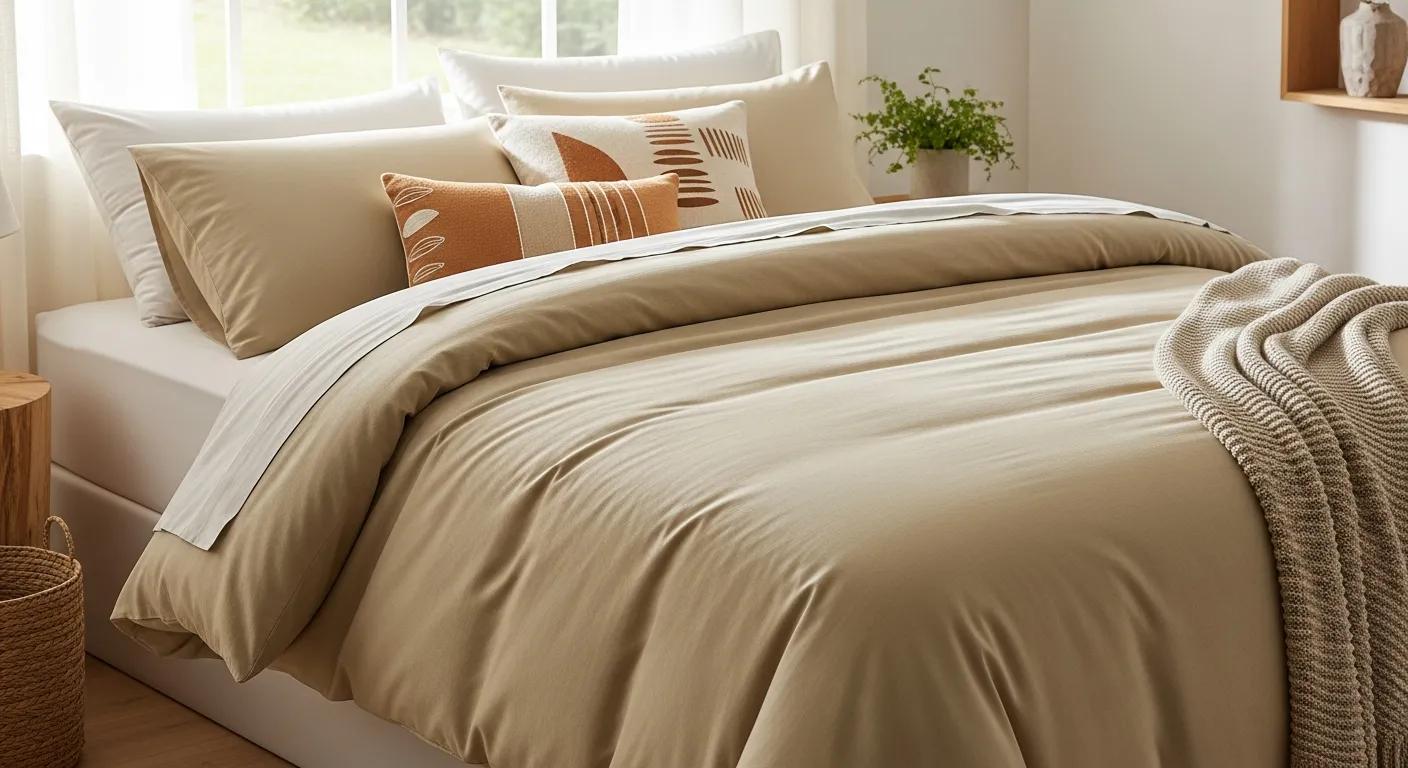
Bamboo quilt covers are duvet covers made from viscose derived from bamboo fibres. They combine responsible sourcing with a silky, breathable feel that can improve sleep and suit eco-conscious homes. Below, we explain how bamboo’s fine fibres, Coolweave™ construction and natural antibacterial traits create a silk-like hand, regulate temperature across seasons and reduce irritation for sensitive skin. If you overheat at night, have reactive skin or want bedding that lasts, bamboo offers moisture-wicking performance plus a low-friction surface that’s kinder to hair and skin. Read on to find out what makes bamboo so soft, how it controls temperature in real life, why it’s a good choice for allergy-prone sleepers, how its cultivation compares environmentally to conventional fibres, and simple care tips to keep your bedding luxurious. At the end, we note where to find Australian-designed organic options from Adore Earth.
At Adore Earth, we design organic bamboo quilt cover sets made from 100% viscose from bamboo — practical, skin-friendly bedding for people who care about comfort and the planet.
What makes bamboo quilt covers feel so soft and comfortable?
Bamboo quilt covers feel luxuriously soft because viscose from bamboo yields very fine, smooth filaments that drape and glide against the skin. Combined with finishing techniques — think sateen-style weaves or careful calendaring — those filaments create a silk-like hand and fluid drape that improve overnight comfort. The result is bedding that feels cool to the touch, reduces micro-abrasion to hair and skin, and keeps its pleasant feel night after night. Understanding this fibre structure makes it clear why many people choose bamboo over coarser natural or synthetic alternatives.
How do bamboo fibres create a luxurious, silk-like feel?
Viscose from bamboo is made into fine, even filaments that give the fabric a smooth, satin-like surface and gentle drape. Those fine filaments cut surface friction and let the weave lie flatter, which enhances the perception of silkiness. Lightweight softening and considered weave choices add sheen and drape without sacrificing breathability. In short, the combination of fibre geometry, filament uniformity and finishing gives bamboo quilt covers a soft, high-end feel similar to silk — with more airflow.
Why is softness important for better sleep?
Soft bedding reduces friction against skin and hair, which can lower micro-arousals and help you stay asleep longer. A gentle surface soothes sensitive skin, reducing the chance of irritation for conditions like eczema or rosacea. Many sleepers report that softer sheets help them relax faster and maintain deeper sleep stages. Those tactile benefits work alongside temperature control and hygiene advantages to support more consistent rest and better comfort the next day.
Bamboo quilt covers pair tactile luxury with practical function — next, we’ll look at how they help regulate temperature all year round.
How do bamboo quilt covers regulate temperature for year‑round comfort?
Bamboo quilt covers control temperature through breathable fibre structure and moisture-wicking performance, often enhanced by engineered weaves such as Coolweave™ that create tiny channels for airflow and evaporation. The fabric moves moisture away from the skin and spreads it over the surface so it can evaporate — cooling you in warm conditions and avoiding cold dampness in cooler weather. The result is a comfortable microclimate next to your body: cooling on hot nights and thermally balanced when layered in winter. Below is a quick comparison showing how bamboo measures up against common alternatives.
Different fabrics vary in breathability and moisture handling — important factors for seasonal comfort.
| Fabric | Breathability & Moisture Management | Seasonal Recommendation |
|---|---|---|
| Bamboo Fabric (viscose from bamboo) | High breathability with strong moisture‑wicking and evaporative cooling; engineered weaves increase airflow | Great year‑round — cool on its own in summer, layer in winter |
| Cotton (conventional) | Moderate breathability; absorbs moisture but can retain dampness | Best for mild climates; can feel heavy in high humidity |
| Silk | Moderate breathability; insulating with limited moisture‑wicking | Luxurious for temperate seasons; less effective with heavy perspiration |
This table highlights bamboo’s advantage for sleepers who want cooling performance plus year‑round versatility. Next, we explain the Coolweave™ idea in simple terms.
What is the Coolweave™ structure and how does it work?
Coolweave™ is a weave and finishing approach that creates tiny channels and a slightly open surface to boost airflow and speed moisture transfer from skin to fabric. By arranging fibres to encourage capillary action and evaporation, the weave reduces heat build‑up and helps sweat escape more efficiently than tightly packed fabrics. Paired with viscose‑from‑bamboo filaments that move moisture well, Coolweave™ delivers a natural cooling effect without synthetic additives — useful for sleepers who change temperature during the night.
How does bamboo bedding keep you cool in summer and warm in winter?
In warm weather, bamboo wicks sweat away from the skin and lets evaporation cool the surface while its weave improves ventilation. In colder months, the same breathability prevents clamminess and, when combined with a suitable insert or layering, helps maintain thermal balance without trapping excess heat. Practical tips: use a bamboo quilt cover as a breathable outer layer or pair it with a tog‑rated insert for added warmth — that way you keep bamboo’s low‑friction, breathable surface against your skin while tailoring warmth to the season.
Bamboo’s temperature benefits also support better hygiene and allergy control, which we cover next.
Are bamboo quilt covers suitable for sensitive skin and allergy sufferers?
Yes — bamboo quilt covers suit many sensitive and allergy‑prone sleepers. The fabric’s natural antibacterial tendencies and effective moisture control reduce irritants and make the sleep surface less welcoming to common allergens. Viscose processing removes coarse plant residues, producing a smooth fabric that minimises skin abrasion. Lower retained moisture and antimicrobial surface traits help deter dust mites and mildew — common triggers for allergic reactions. The table below shows how bamboo’s fabric attributes translate into direct benefits for users.
The table summarises bamboo fabric attributes and their comfort or health benefits.
| Attribute | Fabric Mechanism | User Benefit |
|---|---|---|
| Antibacterial tendencies (bamboo kun remnants) | Natural compounds, plus a smooth viscose finish, can reduce bacterial growth. | Less odour and fewer microbial irritants for sensitive skin |
| Hypoallergenic surface | Fine, smooth fibres that minimise friction and trap fewer irritants | Reduced redness and fewer micro‑abrasions |
| Moisture‑wicking | Rapid transport of moisture and quick evaporation | Drier sleeping surface that discourages dust mites and mould |
These features explain why many people with sensitive skin find bamboo beneficial. Below, we outline the specific antibacterial and hypoallergenic mechanisms in plain terms.
What hypoallergenic and antibacterial properties does bamboo offer?
Raw bamboo contains compounds often called “bamboo kun,” which have been linked to antibacterial activity. While viscose processing changes the raw material, the finished fibres are smooth and less likely to trap dirt or irritants. The result is a low‑friction, breathable fabric that reduces mechanical irritation and creates a more stable microclimate next to the skin — helpful for people with eczema, rosacea or general sensitivity. These combined effects show why bamboo bedding can be a natural, comfortable choice for allergy‑sensitive sleepers.
How do bamboo quilt covers resist dust mites and mould?
Bamboo’s fast moisture transport and quick drying make it harder for dust mites and mould to thrive, since they prefer damp conditions. The fabric’s antibacterial tendencies can also lower microbial populations that cause odour or fabric breakdown. Good care — gentle washing and thorough drying — amplifies these benefits. In short, bamboo quilt covers help keep your sleep surface cleaner when paired with sensible laundering and ventilation practices.
Skin and hygiene benefits are also part of a wider sustainability story that positions bamboo as a greener textile choice.
Why are bamboo quilt covers a sustainable choice for eco‑conscious homes?
Bamboo is a fast‑growing, renewable resource that typically needs less irrigation and fewer pesticides than conventional cotton, reducing environmental pressures during cultivation. Its rapid regrowth and ability to regenerate without replanting make efficient use of land, and viscose‑from‑bamboo products can be biodegradable at the end of life when not heavily bonded with synthetic finishes. For shoppers weighing eco‑friendly duvet materials, bamboo stands out for renewability and often lower agrochemical input — making it an appealing option for sustainable home textiles. Below is a short comparison to help clarify the trade‑offs between bamboo and cotton.
The table below compares key environmental and cultivation attributes relevant to home textile buyers.
| Attribute | Bamboo | Conventional Cotton |
|---|---|---|
| Renewability | Rapid regrowth and efficient land use | Slower regrowth and seasonal replanting |
| Chemical input | Generally, lower pesticide needs in cultivation | Often higher pesticide and fertiliser use |
| End‑of‑life | Biodegradable viscose options available | Biodegradable, but may be treated with chemical finishes |
This comparison highlights bamboo’s strengths in renewability and lower cultivation inputs. The next section explains how cultivation choices affect water use and pesticide needs.
How does bamboo cultivation affect water use and pesticide reduction?
Bamboo species grown for textiles typically need less irrigation than many conventional crops and can be harvested repeatedly without replanting, reducing both water and land pressure over time. Because bamboo can be resilient in its native regions, it often requires fewer pesticides and herbicides than more pest‑sensitive crops, which lowers chemical runoff and soil contamination risks. These cultivation traits make bamboo an attractive fibre for buyers who want to reduce the agricultural footprint of their home textiles.
What makes Adore Earth’s organic bamboo bedding environmentally friendly?
At Adore Earth we design bedding from 100% viscose from bamboo and focus on sustainability and biodegradability as core priorities. We source organic bamboo where possible and craft quilt cover sets that combine natural fibre benefits with considered design. For shoppers after Australian‑designed, organic options that prioritise softness, temperature regulation and pet‑hair resistance, our approach shows how thoughtful sourcing and product design work together. Explore our collection to compare styles and find specifications that match your sustainability preferences.
Next, we cover durability and simple care tips to keep your bamboo bedding feeling its best.
How durable are bamboo quilt covers, and what are the best care practices?
When spun and finished well, bamboo viscose yarns retain softness and resist pilling better than some synthetic blends — but longevity depends on fibre quality, weave density and finishing. Gentle care — mild detergent, gentle wash cycles and controlled drying — keeps fibres aligned and preserves texture and structure. With proper care, bamboo bedding lasts as long as many premium natural fibres; avoid harsh agitation and high heat to maximise lifespan. The table below compares care and durability notes for common fabrics to help you plan maintenance.
This table summarises washing and care guidance for practical upkeep.
| Fabric | Recommended Wash & Dry | Pilling & Longevity Note |
|---|---|---|
| Bamboo Fabric | Gentle cycle, mild detergent, low‑heat tumble or line dry | Low‑to‑moderate pilling risk when cared for; good softness retention |
| Cotton | Warm wash acceptable, tumble dry at moderate heat | Durable but may stiffen without softeners |
| Silk | Cold wash or delicate; air dry preferred | Sensitive to heat and abrasion; needs careful handling |
The comparison shows bamboo benefits from thoughtful care. The next sections outline how the fibres hold up and the specific steps to protect them.
How do bamboo fibres maintain softness and resist pilling over time?
Bamboo’s fine filaments and smooth surface reduce the mechanical entanglement that leads to pilling. Finishing processes that align and stabilise yarns further preserve long‑term softness. Choosing higher‑quality weave constructions and avoiding high‑friction laundering helps prevent filament breakage. In regular use, rotate bedding, keep abrasive fabrics away, and store items correctly to extend life. These simple habits help bamboo quilt covers keep their silk‑like feel for years.
What are the recommended washing and maintenance tips for longevity?
Wash bamboo quilt covers on a gentle cycle with a mild, enzyme‑free detergent in cool to warm water. Avoid bleach and harsh chemicals. Tumble dry on low heat or, preferably, line dry in the shade to prevent heat stress — if you tumble dry, remove items promptly to reduce wrinkles. Store bedding in a dry, ventilated place and air it occasionally to stay fresh between washes. Following these steps preserves softness while supporting bamboo’s antimicrobial and moisture‑management benefits.
Careful maintenance complements product quality and shows why choosing a trusted brand matters. The final section helps explain why Adore Earth is a strong choice.
Why choose Adore Earth for your organic bamboo quilt covers?
We’re an Australian‑designed brand focused on luxurious, eco‑conscious bedding. Our quilt cover sets are made from 100% viscose‑from‑bamboo and emphasise softness, temperature regulation and skin‑friendly performance. We highlight Australian design and ownership, hypoallergenic and antibacterial benefits, tight weaves that resist pet hair, and sustainability through biodegradable materials and reduced agricultural inputs. To give customers confidence, we stand by the quality of our products and offer convenient delivery options – so you can try our bedding with minimal risk. These practical promises translate into quality design, flexible support, and easy ordering for people who prioritise sustainable bedding.
The list below summarises Adore Earth’s key selling points in plain terms.
- 100% Organic Bamboo: We use viscose from bamboo to deliver a naturally soft fabric for bedding.
- Australian Designed and Owned: Our designs are guided by Australian climates and everyday comfort needs.
- Customer‑Friendly Policies: We aim to make buying easier and lower risk, with support for your purchase.
What unique benefits does Adore Earth offer compared to competitors?
We combine organic bamboo fabrics with Australian design sensibilities to create bedding that performs in local climates. Our claims of hypoallergenic, antibacterial and pet‑hair resistant features reflect the material benefits described above, and our commitment to customer satisfaction provides peace of mind. Convenient delivery options simplify getting your new bedding, which many customers find decisive. Altogether, these practical advantages help you weigh the benefits beyond the fibre itself.
How does Adore Earth’s Australian design enhance quality and customer satisfaction?
Designing for Australian conditions encourages choices that support temperature regulation and everyday usability — from weave decisions to construction details like secure tie corners and thoughtful closures. Local design focus also informs clear care guidance to help bedding last. By pairing 100% viscose‑from‑bamboo with regionally informed design, we aim to deliver both comfort and durability that meet real‑world needs.
Bamboo quilt covers offer sensory luxury, smart climate control, skin‑friendly hygiene and a lower‑impact material choice — and Adore Earth’s product and service features make these benefits easy to access for shoppers who prioritise those qualities.
Frequently Asked Questions
1. How do bamboo quilt covers compare to cotton in terms of comfort?
Bamboo quilt covers usually feel softer than conventional cotton because the fibres are finer and smoother. Bamboo wicks moisture better, which helps regulate temperature — keeping you cool in summer and balanced in winter — and its low‑friction surface is kinder to sensitive skin. Cotton can still be comfortable, but it often doesn’t match bamboo’s breathability and moisture‑management performance.
2. Are bamboo quilt covers environmentally friendly?
Yes. Bamboo grows quickly and typically needs less water and fewer pesticides than conventional cotton, which reduces the environmental impact of cultivation. When processed responsibly, viscose‑from‑bamboo products can also be biodegradable, making bamboo a strong choice for shoppers focused on sustainability.
3. Can bamboo quilt covers help with allergies?
They can. Bamboo’s natural antibacterial tendencies and moisture‑wicking properties reduce conditions that encourage dust mites and mould, and the smooth fabric traps fewer irritants. For many allergy‑prone sleepers, bamboo creates a cleaner, more comfortable sleep surface.
4. How should I care for my bamboo quilt covers to ensure longevity?
Wash on a gentle cycle with a mild detergent, avoid bleach and harsh chemicals, and dry on low heat or line dry in the shade. Storing bedding in a dry, ventilated space and airing it occasionally keeps it fresh and preserves softness.
5. What is the significance of the Coolweave™ structure in bamboo bedding?
Coolweave™ is a weave and finish method that increases airflow and speeds moisture transfer, encouraging evaporative cooling. It helps bamboo bedding provide a comfortable microclimate — cooling on hot nights and remaining balanced when layered in cooler weather.
6. Are there any specific health benefits associated with using bamboo quilt covers?
Yes. Bamboo’s antibacterial tendencies can reduce odour and microbial growth, and the hypoallergenic, low‑friction surface helps minimise skin irritation. These factors make bamboo a good option for people with sensitive skin or common sleep‑time skin concerns.
7. How does the softness of bamboo quilt covers impact sleep quality?
Softness reduces friction on skin and hair, which can lead to fewer disturbances and a more restful night. A gentle surface also soothes sensitive skin, helping you relax into deeper sleep stages — meaning bamboo’s luxurious feel can genuinely support better sleep.
