




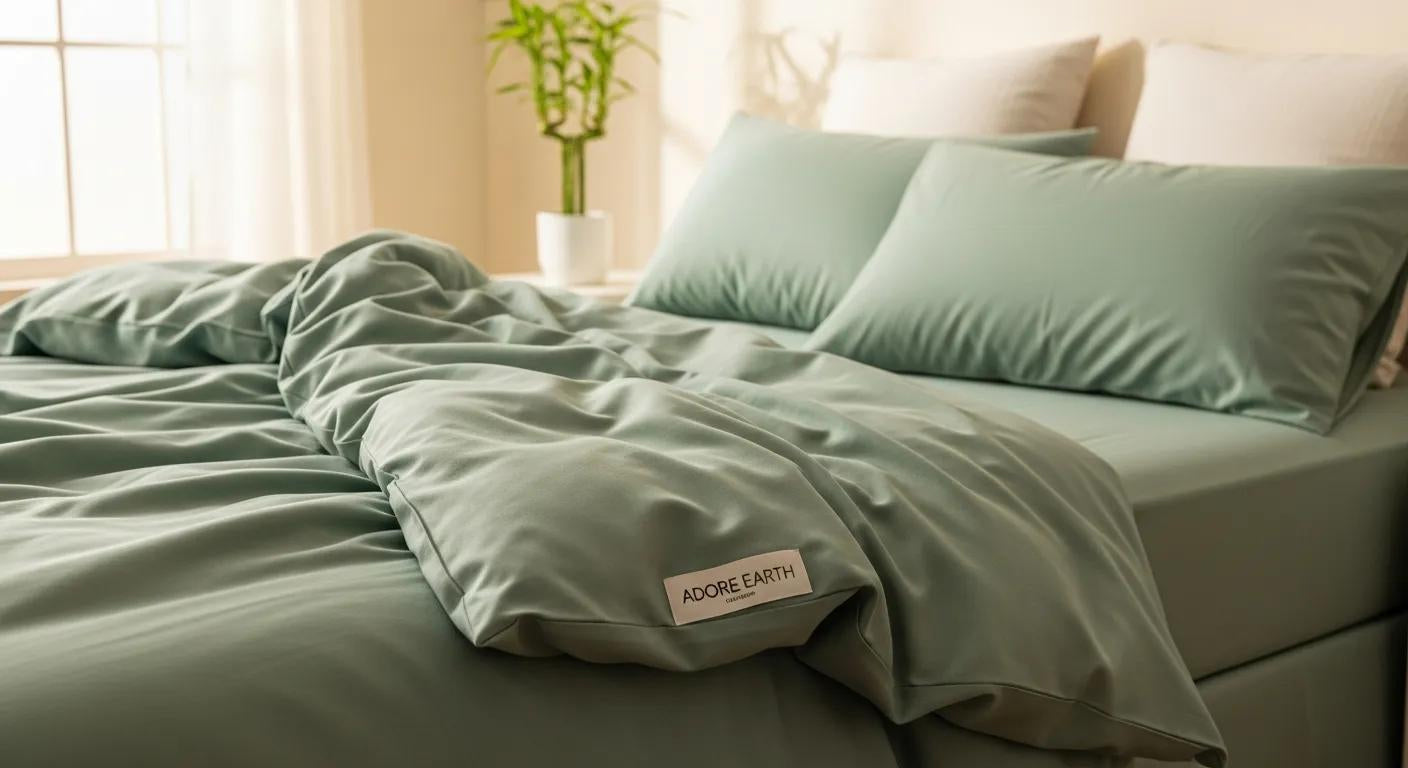
Bamboo Sheets — Sustainable Comfort for Better Sleep
Bamboo sheets are woven from fibres sourced from the bamboo plant and finished into a soft, breathable fabric that balances sustainability with everyday comfort. Their appeal comes down to two simple strengths: bamboo regrows fast as a raw material, and the fabric naturally helps regulate temperature and wick moisture for a cooler, drier night’s sleep. Here, you’ll discover why bamboo is a great choice for the planet, how our **organic bamboo sheets** can be kinder to sensitive skin, how bamboo compares to cotton, and practical care tips to keep your sheets feeling fresh. We’ll also touch on why choosing quality, responsibly made bedding truly matters.
What Makes Bamboo Sheets an Eco-Friendly Bedding Choice?
Bamboo earns its eco‑credentials because many species regrow quickly and often need fewer inputs than conventional fibre crops. Put simply: some bamboo varieties sprout back from their root systems after harvest, so there’s less replanting, less soil disturbance and ongoing carbon storage in standing biomass. When manufacturers use mechanical processing or closed‑loop chemical systems, the environmental footprint drops further by limiting chemical discharge during fibre production.
Understanding how bamboo grows and is processed helps you choose genuinely lower‑impact bedding.
- Fast regrowth reduces the need to clear new land and helps keep carbon stored in the landscape.
- Higher fibre yield per hectare means more material from less land compared with some crops.
- When fibres are processed responsibly, bamboo fabrics can have a lower lifecycle impact than many synthetics.
Those points lead us into a practical advantage: the cultivation traits — regrowth speed and land efficiency — that make bamboo a scalable, lower‑impact raw material.
How Does Bamboo's Rapid Growth Support Sustainability?
Bamboo’s quick regrowth supports sustainability through repeated harvests and steady biomass build‑up, which together reduce pressure to convert more land for fibre production. Many bamboo species mature fast and regenerate from existing root systems, so replanting isn’t always necessary. That limits soil disturbance and erosion, keeps continuous ground cover to store carbon and supports local ecosystems.
Because of these traits, bamboo supply can remain stable without frequent land conversion — a big advantage when creating sustainable textiles for your home.
Why Is Bamboo Cultivation Impact Compared to Cotton?
Bamboo is often lower impact because many species need less irrigation and fewer agrochemicals than conventional cotton, which historically uses large amounts of water and pesticides. Bamboo’s advantage comes from its adaptability to local rainfall and root systems that hold soil and nutrients in place, lowering runoff and erosion. With fewer pesticides and fertilisers, there’s less chemical runoff into waterways and reduced exposure for farm workers. Of course, how the fibre is turned into fabric also plays a big part in the final environmental outcome.
With those cultivation benefits in mind, the next section looks at health and comfort advantages that make organic bamboo sheets appealing for people with sensitivities or anyone who wants a cooler night’s sleep.
What Are the Health Advantages of Organic Bamboo Sheets?
Organic bamboo sheets support health and comfort through a mix of fibre properties and fabric construction: natural breathability and moisture‑wicking reduce surface humidity, antimicrobial traits help limit bacterial growth on bedding, and a smooth fibre surface cuts friction and irritation for sensitive skin. These benefits come from the fibre’s structure and from organic farming that reduces chemical residues. For allergy sufferers or people with reactive skin, this can mean fewer irritants and a more restful sleep environment. Below, we break down hypoallergenic and antibacterial benefits, then explain how temperature‑regulating weaves like Coolweave™ keep sleep steady.
Primary health advantages to consider:
- Hypoallergenic surface: Organic bamboo fibres lower common irritants and reduce residues from agrochemicals.
- Antibacterial resistance: Fibre and weave structure can inhibit bacterial growth, cutting odour and microbial buildup.
- Thermoregulation: Breathable weaves and moisture‑wicking keep a stable, comfortable microclimate for sleep.
Together, these features explain why many sleepers wake feeling fresher and more comfortable on bamboo bedding, and help identify who benefits most from organic bamboo sheets.
How Do Hypoallergenic and Antibacterial Properties Benefit Sensitive Skin?
Hypoallergenic bamboo sheets help sensitive skin by reducing common triggers: organic sourcing limits agrochemical residues, and the fabric’s smooth fibres lower friction and irritation. That combination — cleaner sourcing plus a gentle hand — means less microtrauma for delicate skin. For people with eczema, rosacea or contact dermatitis, bedding that resists dust‑mite colonisation and microbial overgrowth can reduce night‑time flare‑ups and itching. Choosing **organic bamboo** bedding is a practical step for anyone prioritising skin health and fewer allergens in the bedroom.
Reducing skin irritants naturally connects to another sleep benefit: thermoregulatory fabrics that help you sleep longer without temperature‑related wakeups.
How Do Temperature-Regulating Bamboo Sheets Improve Sleep Quality?
Temperature‑regulating bamboo sheets improve sleep by moving heat and moisture away from your body, creating a cooler, drier microclimate that supports uninterrupted sleep cycles. The effect comes from breathable fibre geometry and specialised weaves — like our Coolweave™ — that boost air circulation and pull sweat vapour off the skin so your core temperature stays more stable. This is especially helpful for hot sleepers or anyone in a warm climate: reducing thermal stress lowers night‑time wakefulness and helps you get deeper, more continuous rest.
Premium organic bamboo bedding blends hypoallergenic credentials with Coolweave™ construction to tackle both skin sensitivity and thermoregulation in one choice.
How Do Bamboo Sheets Compare to Cotton in Environmental Impact?
Bamboo and cotton differ on key environmental metrics — water use, chemical inputs, land efficiency and biodegradability — so direct comparisons help when you’re choosing consciously. Bamboo generally needs less irrigation and fewer pesticides than conventional cotton, and its regrowth properties raise yield per hectare. But how the product is made and how long it lasts are also important: a well‑made, long‑lasting bamboo sheet can often outperform cotton on overall environmental impact, while poorly processed bamboo viscose can lose those raw‑material benefits. The table below summarises typical differences.
The following table summarises core environmental comparisons:
| Material | Metric | Typical Characteristic |
|---|---|---|
| Bamboo | Water usage per kg | Generally lower than conventional cotton, thanks to the rainfed cultivation potential |
| Cotton | Water usage per kg | Typically high, often requiring irrigation in arid growing regions |
| Bamboo | Pesticide/fertiliser use | Often minimal, especially in organically managed stands |
| Cotton | Pesticide/fertiliser use | Historically higher in conventional systems |
| Bamboo | Renewability & yield | High regrowth and yield per hectare with rapid biomass recovery |
This snapshot highlights why bamboo can offer advantages at the cultivation stage; processing choices and end‑of‑life behaviour also shape overall sustainability and are discussed further below.
What Are the Water and Pesticide Usage Differences Between Bamboo and Cotton?
Bamboo typically needs less irrigation and fewer pesticides than conventional cotton, which can be water‑hungry and agrochemical‑intensive in many regions. That advantage comes from ecological adaptation: bamboo varieties matched to local rainfall cut the need for supplemental watering, and the plant’s natural resilience reduces pest pressure. The result is less strain on freshwater supplies and lower agrochemical runoff. Keep in mind that exact impacts depend on location and farm practices.
With cultivation inputs covered, the next section looks at durability and comfort — two consumer‑facing factors that affect how long your sheets last and their environmental impact.
How do durability and Comfort Differ Between Bamboo and Cotton Sheets?
Durability and comfort come from fibre characteristics and weave: bamboo‑derived fabrics are often celebrated for a silky hand that stays soft after many washes, while cotton’s texture varies by variety and thread count. Properly made bamboo viscose or lyocell blends can retain tensile strength and resist pilling, giving a longer usable life and excellent value over time. From a sustainability view, durability matters: longer‑lasting sheets mean fewer replacements and a smaller embedded environmental footprint. Many premium organic bamboo bedding lines highlight this lifecycle advantage — combining lasting softness with extended service life.
Durability naturally leads to care tips: how to launder and store sheets to protect softness and longevity.
How Can You Care for Bamboo Sheets to Ensure Longevity?
Good care keeps bamboo sheets soft and strong by protecting fibre integrity and colour. Focus on gentle washing, mild detergents and low‑heat drying to avoid shrinkage and fibre damage. Heat, harsh chemicals and heavy mechanical action break down cellulose fibres over time; gentle routines help them last longer and feel better.
Use the table below to match common care actions with their purpose and recommended method to extend sheet life.
| Care Action | Why it matters | Recommended method/frequency |
|---|---|---|
| Washing temperature | High heat weakens fibres | Cold‑to‑warm wash (30°C–40°C), gentle cycle; weekly or as needed |
| Detergent choice | Harsh detergents strip fibres and dyes | Use mild, enzyme‑free detergent; avoid bleach |
| Drying method | Excess heat causes shrinkage | Line‑dry or tumble on low heat; remove promptly |
| Storage | Damp storage fosters mould/odour | Store in a breathable cotton bag in a cool, dry place |
Here are straightforward washing and drying tips to follow day‑to‑day:
- Wash bamboo sheets on a gentle cycle with cold‑to‑warm water to protect fibres and colour.
- Choose a mild, phosphate‑free detergent and skip bleach or harsh optical brighteners.
- Line‑dry when possible, or tumble dry on low and remove sheets promptly to reduce wrinkles and heat exposure.
In short: gentle, low‑heat laundering plus mild detergents and careful storage will preserve softness and structure, stretching the usable life of your sheets and lowering their lifecycle impact.
What Are the Best Washing and Drying Practices for Bamboo Bedding?
Best practices focus on minimising mechanical and thermal stress: pick a gentle machine cycle, use cold‑to‑warm water and a mild detergent free of strong brighteners and bleach. Tumble dry only on low heat or ideally line‑dry to prevent shrinkage and protect fibres; remove sheets promptly to keep weave structure and cut down on ironing. Sticking to these habits reduces pilling and keeps sheets comfortable for longer.
These habits lead to simple maintenance techniques that help keep the fabric’s hand and colour over the long run.
How to Maintain Softness and Colour in Bamboo Sheets?
To keep softness and colour intact, avoid fabric softeners that coat fibres, use gentle detergents and occasionally refresh sheets with a vinegar rinse to clear residue. Fabric softeners and heavy detergents leave deposits that change hand feel and reduce wicking; a cup of white vinegar in a cold rinse (follow with a mild detergent wash) helps restore softness. Also, avoid over‑drying, which can stiffen fibres. Fold sheets and store them in breathable containers away from direct sunlight to prevent fading and odour buildup.
Simple, regular care preserves comfort and appearance and complements the inherent durability of responsibly produced bamboo bedding.
What Is Adore Earth's Commitment to Quality and Sustainable Bamboo?
Adore Earth (Adoreearth™) is an Australian‑designed brand offering organic bamboo bedding made for comfort, durability and sustainability. Our range includes 100% organic bamboo sheets in multiple sizes and colours, quilt cover sets, quilts, mattress toppers, protectors and pillowcases. We focus on a soft, long‑lasting hand, hypoallergenic and antibacterial benefits, and temperature‑regulating constructions like Coolweave™ that help dissipate heat. To make switching to sustainable bedding easier, we stand by the quality of our products, offering a straightforward way to experience them with confidence.
The table below explains common certifications and what they mean when you’re choosing organic and sustainable bamboo bedding.
| Certification | What it verifies | What it means for you |
|---|---|---|
| OEKO‑TEX | Tests for low levels of harmful substances in textiles | Helps ensure fewer chemical residues and suitability for sensitive skin |
| Organic fibre verification | Confirms absence of prohibited agricultural chemicals | Reduces pesticide exposure for users and local ecosystems |
This helps you understand common marks and choose products that match your health and environmental priorities. Clear claims make sustainability easier to trust.
At Adore Earth, we connect product design with quality sourcing: organic bamboo fabrics, temperature‑smart weaves and customer-friendly policies are all part of our effort to remove barriers for people switching to more sustainable bedding. Highlighting durability and comfort also supports the idea that choosing well‑made, longer‑lasting sheets lowers your overall environmental impact.
Understanding Certifications for Organic and Sustainable Bamboo
Certifications like OEKO‑TEX and recognised organic labels each confirm specific sustainability attributes — like chemical safety or low pesticide use. These marks show that the textile has been tested for the stated claims — useful if you have sensitive skin or want to avoid chemical residues.
These standards exist to help ensure safety and environmental responsibility across the textile industry.
Frequently Asked Questions
What are the environmental benefits of choosing bamboo sheets over synthetic alternatives?
Bamboo sheets generally have a lower environmental footprint than many synthetic options. They’re biodegradable, can come from rapidly renewable plants and often need less water and fewer chemicals at the cultivation stage. That means less long‑term pollution and a smaller contribution to microplastic pollution than synthetic fibres. As always, the processing method matters — responsibly processed, durable bamboo linens deliver the biggest overall gains.
Can bamboo sheets help with allergies and respiratory issues?
Yes. Bamboo fibres are naturally breathable and moisture‑wicking, which helps keep bedding drier — a less hospitable environment for dust mites and mould. Organic sourcing also reduces chemical residues. Together, these traits can reduce common allergens and make the bed more comfortable for people with sensitivities. If you have severe allergies, check for relevant certifications and consider trying a sample to confirm compatibility.
How do bamboo sheets compare in value to traditional cotton sheets?
Bamboo sheets can represent a slightly higher initial investment than basic cotton, but many shoppers find they offer excellent value over time because of their softness and durability. Long‑lasting sheets offer better value over their lifespan, and the added comfort and health benefits can make the initial investment worthwhile for people prioritising quality and sustainability.
Are bamboo sheets suitable for all skin types?
Generally, yes — bamboo sheets are smooth and low‑abrasion, making them a good choice for most skin types, including sensitive or reactive skin. Their hypoallergenic and antibacterial characteristics add another layer of suitability. As with any textile, if you have a specific condition or severe sensitivity, test the fabric first or consult your dermatologist.
What is the best way to store bamboo sheets when not in use?
Store sheets folded in a cool, dry place away from direct sunlight to prevent fading and fibre weakening. Breathable cotton bags are ideal for long‑term storage to avoid trapped moisture. Don’t store sheets in damp or humid spaces, which can encourage mould or odours.
How do I know if my bamboo sheets are made with care?
Look for trusted certifications like OEKO‑TEX or other recognised organic fibre verifications. Reputable companies will be transparent about their products and processes. Certifications plus clear product information are the best indicators that the sheets were produced with quality and care.
