




Sustainable bedding means bed linen and sleep layers made to reduce environmental impact while keeping comfort and durability at the forefront of mind. In this guide, we explain how organic bamboo sheets and other eco-friendly bed linen in Australia can improve sleep, shrink your bedroom’s footprint and create a healthier indoor space. If you’re looking for premium eco-friendly bedding Australia that balances softness, temperature control and low chemical exposure, organic bamboo sheets often tick those boxes. Read on for the environmental and wellness benefits, how to pick hypoallergenic bamboo bedding, practical styling tips, and the certifications and practices to look for. You’ll also find product categories, checklists and simple steps to build a cooler, cleaner and more sustainable bedroom with temperature-regulating bamboo sheets.
Why choose sustainable bedding for your bedroom refresh?
Sustainable bedding is designed to lower environmental harm and support better wellbeing by using responsibly sourced fibres and low-impact manufacturing. Choosing eco-friendly bed linen Australia reduces water and chemical inputs, limits exposure to harsh finishes and gives you breathable, hypoallergenic surfaces that feel comfortable night after night. The result is a bedroom that feels luxurious, aligns with your values and can offer excellent value because durable pieces last longer. Below are the main, practical benefits of choosing sustainable bedding.
Sustainable bedding delivers clear, measurable gains:
- Environmental benefit: Uses fewer resources and produces less pollution than conventional textiles.
- Health benefit: Lowers contact with synthetic chemicals and common irritants for better sleep.
- Comfort benefit: Improves breathability and temperature regulation for more comfortable nights.
- Ethical benefit: Supports traceability and fairer manufacturing choices across the supply chain.
These advantages explain why many shoppers looking for premium eco-friendly bedding in Australia prioritise provenance and performance; next, we cover the environmental specifics.
What are the environmental benefits of eco-friendly bed linen in Australia?

Eco-friendly bed linen reduces water use, cuts pesticide inputs and often offers better end-of-life outcomes because many sustainable fibres biodegrade or can be recycled. In practice, responsibly managed bamboo and organic farming typically need less irrigation than conventional cotton and avoid synthetic pesticides, which helps soil and local ecosystems. At the finish, fewer chemical treatments reduce wastewater toxicity, and biodegradable fibres lessen long-term landfill impact. Together, these improvements make sustainable bedding a tangible way to shrink your home’s textile footprint without compromising quality.
Key environmental advantages include:
- Lower water use: Some bamboo systems and organic practices require less irrigation than conventional cotton.
- Reduced pesticides: Organic sourcing removes synthetic pesticides from the supply chain.
- Improved end-of-life: Biodegradable materials break down more readily than most synthetics.
When combined, these benefits make sustainable bedding a practical choice for comfort-conscious, eco-aware homes; next, we look at how it supports health and wellness.
How does sustainable bedding support health and wellness?
Sustainable bedding helps health by limiting exposure to harsh finishing chemicals, reducing allergen build-up through appropriate weaves, and offering natural antibacterial or moisture-wicking properties that support good sleep hygiene. Hypoallergenic bamboo bedding—often made from viscose from bamboo—has a smooth fibre surface that’s gentler on sensitive skin and, when woven tightly, can trap fewer dust and allergen particles. Better breathability and temperature-regulating sheets stabilise the microclimate at the skin surface, which can support deeper, more restorative sleep. Choosing chemical-free, organically processed linens therefore benefits respiratory and skin comfort over time.
Real-world outcomes include less nighttime overheating, fewer skin reactions for sensitive sleepers, and easier upkeep for a consistently clean sleep surface; next, we explain why organic bamboo performs so well.
What makes organic bamboo sheets in Australia a top sustainable bedding choice?
Organic bamboo sheets combine softness, breathability, moisture-wicking and low chemical input—qualities that appeal to eco-conscious sleepers seeking premium eco-friendly bedding Australia. Viscose from bamboo creates a fine, drapey yarn with a silky handfeel and natural airflow; well-chosen weaves balance durability with resistance to pet hair and long-term wear. As a feedstock, organic bamboo typically needs less water and avoids synthetic pesticides compared with many conventional crops, and finished pieces usually break down more easily than synthetics. Below is a concise comparison of fabric attributes to help you weigh the benefits of organic bamboo sheets in Australia.
The table below compares key fabric attributes and why they matter to sleepers:
| Property | Characteristic | Why it matters |
|---|---|---|
| Softness | Silky, drapey viscose from bamboo yarn | Creates a luxurious feel and comfortable sleep surface |
| Breathability | High air permeability and moisture wicking | Helps regulate temperature for better sleep |
| Water & chemicals | Lower irrigation & no synthetic pesticides (organic sourcing) | Reduces ecological footprint and chemical exposure |
| Biodegradability | Natural fibre decomposes more readily than synthetics | Improves end-of-life environmental outcomes |
| Hypoallergenic behaviour | Smooth fibre surface resists allergen trapping | Better for sensitive skin and allergy sufferers |
This comparison shows how the material’s natural properties translate into comfort, sustainability and health advantages; the sections that follow look at softness and our Coolweave™ feature in practice.
How does Adore Earth’s 100% organic bamboo bedding deliver softness and luxury?
Adore Earth uses 100% viscose from bamboo to create a smooth, low-friction surface with a soft drape that feels luxurious in use. Fine yarns and a considered weave boost sheen and handfeel while keeping the fabric breathable and resilient through regular washing. Practical perks include reduced pet hair cling where weaves are tighter, and no heavy chemical coatings, so the softness is authentic and long-lasting. For shoppers seeking hypoallergenic bamboo bedding with a premium sensorial profile, these attributes add up to comfortable nights and enduring elegance.
Softness naturally leads to questions about temperature control; the next section explains Coolweave™ and how fabric structure impacts thermal comfort.
What is Coolweave™ technology, and how does it help regulate temperature?
Coolweave™ is a specialised weave that creates tiny micro-gaps within the fabric to boost airflow and let heat escape faster than standard weaves. Those microscopic pathways improve convective and evaporative cooling, so you feel cooler on the surface while sleeping. Paired with viscose from bamboo’s moisture-wicking properties, Coolweave™ helps maintain a stable microclimate for more restorative rest—particularly useful for hot sleepers or anyone wanting year-round comfort.
The next section shows how to match these engineered features to your personal needs when choosing bamboo bedding.
How to choose the best bamboo sheet sets and hypoallergenic bamboo bedding for your needs
Start by listing your priorities—temperature control, sensitive skin, pets, or mattress depth—then match product features like weave type, fabric weight and fitted sheet pocket depth to those needs. Look for Coolweave™ or open micro-structure weaves if you sleep hot, finer viscose yarns for a softer hand, and sturdy closures on quilt covers to keep fillings in place. Check care instructions so you can maintain softness without harsh detergents; longevity matters for sustainability, because durable bedding reduces replacements and overall resource use. Use the checklist below to make confident choices.
Use this checklist to guide purchases:
- Weave and airflow: Pick Coolweave™ or open micro-structure weaves for cooler sleep.
- Yarn and handfeel: Choose finer viscose yarns for lasting softness and drape.
- Hypoallergenic features: Prefer tight weaves and low-chemical processing for sensitive skin.
- Practical fit: Confirm fitted sheets have enough pocket depth and strong elastic retention.
- Care & durability: Follow care labels and favour low-heat drying or line-drying to extend lifespan.
That checklist clarifies priority features; below is a product-type table to match common bamboo items to user needs.
Below is a practical product-type table to help match bamboo product categories to user needs:
| Product Type | Feature | Why it matters |
|---|---|---|
| Bamboo sheet sets | Soft viscose yarn, fitted sheet depth options | The main sleep surface — comfort and breathability matter most |
| Bamboo quilt cover sets | Secure closures, tight weave | Protects fillings, makes washing and styling easier |
| Bamboo mattress toppers | Breathable padding layer | Adds cooling and pressure relief without replacing your mattress |
| Bamboo mattress protectors | Tight-knit protective barrier | Guards against spills and allergens while remaining breathable |
| Bamboo pillowcases | Smooth surface, hypoallergenic | Reduces friction and allergen contact for the face and neck |
Choosing the right mix of these items helps address hot-sleeping, allergies or pet hair; the sections below expand on sensitive-skin features and care routines.
What features should you look for in bamboo bedding if you have sensitive skin?
If you have sensitive skin, favour organic sourcing, minimal chemical finishing and smooth viscose fibres with a tight but soft weave that resists trapping irritants. Look for products that mention low-chemical processing or independent testing like OEKO-TEX, where available, and consider natural-dye or low-impact finish options. Pick pillowcases and fitted sheets with neat seams and secure closures to avoid rubbing against delicate facial skin. These choices protect skin integrity and improve comfort for conditions such as eczema or dermatitis.
Next, we cover care steps that preserve these benefits.
How to care for and maintain organic bamboo sheets so they last
Good care extends the life of bamboo bedding and keeps both performance and sustainability intact. Wash on gentle cycles with cool-to-warm water, use mild phosphate-free detergent, and avoid bleach or fabric softeners that wear fibres down. Tumble dry on low or line-dry where possible to reduce shrinkage and abrasion; remove items promptly from the dryer to minimise creasing. Rotate sheet sets regularly and store linens in a cool, dry place to prevent fibre degradation. These habits preserve softness, temperature regulation and hypoallergenic performance—helping you get the most life from each piece.
A short care checklist:
- Wash gently: Use mild detergent and a gentle cycle.
- Avoid harsh chemicals: No bleach or fabric softeners.
- Dry carefully: Low-heat tumble or line-dry to protect fibres.
- Rotate and store: Regular rotation and cool, dry storage prolong life.
Following these practices helps you keep the benefits of bamboo bedding while reducing waste; next, we look at bedroom design with eco-friendly linens.
How to create a sustainable bedroom design with eco-friendly bed linen in Australia
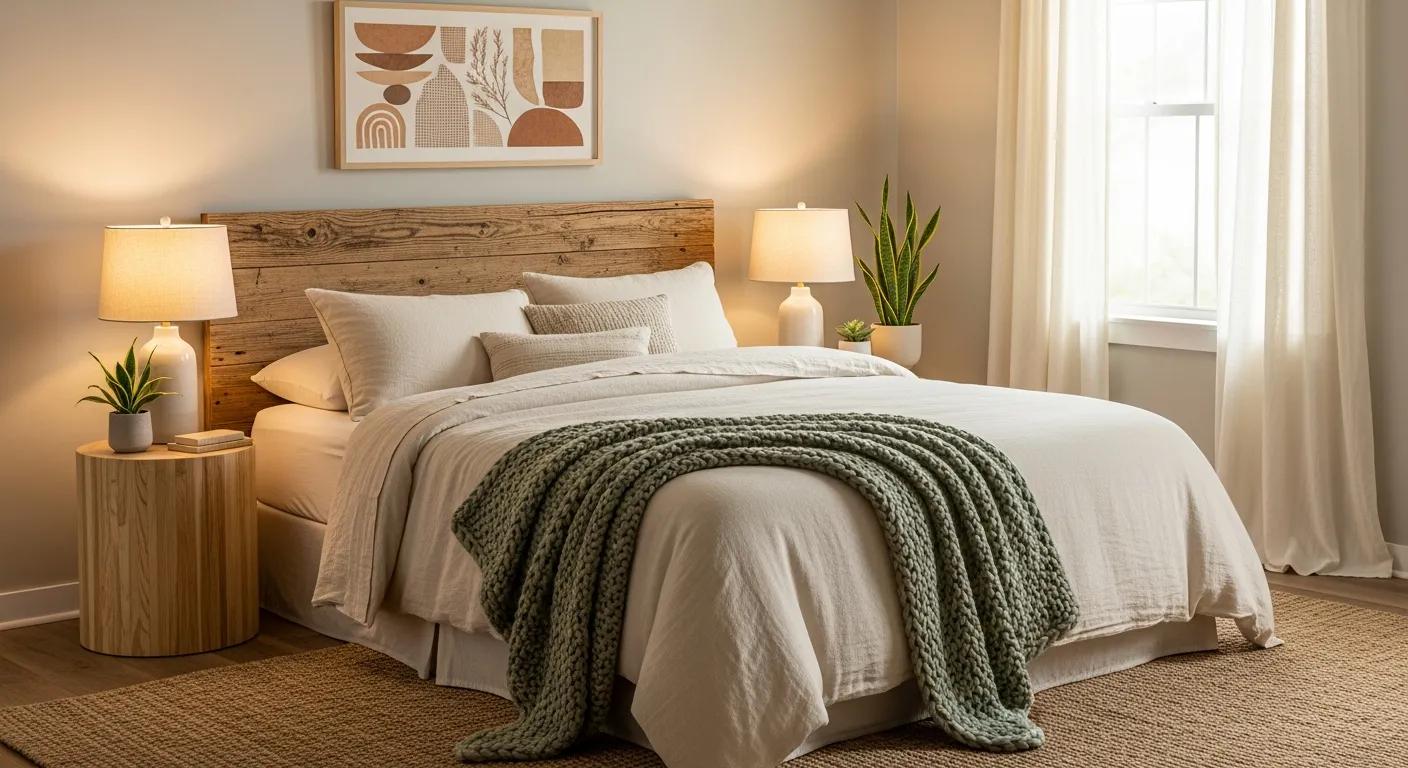
Designing a sustainable bedroom blends considered material choices with colour, texture and functional layering so the bed performs well and looks calm. Let sustainable bed linen Australia be the starting point for your palette and material decisions: choose neutral, nature-inspired colours that show the bamboo’s texture, then layer quilts and throws in complementary sustainable fibres like organic cotton or linen for extra warmth and visual depth. Add locally made furniture, natural‑fibre rugs and energy-efficient lighting to round out a low-impact space that complements temperature-regulating sheets. Practical tips follow.
- Choose a calm palette: Use nature-inspired tones to highlight bamboo texture.
- Layer for function: Add throws and quilts in complementary sustainable fibres for seasonal control.
- Mix textures: Pair smooth bamboo sheets with textured natural throws for visual depth.
- Prioritise local pieces: Select locally made furniture and rugs to reduce transport footprint.
These steps help you create a bedroom that’s both beautiful and performance-focused; next are tactical tips for styling sustainable bedding.
Practical tips for integrating sustainable bedding into your home decor
Start with the bamboo sheet set as a refined, neutral base and build layers that add warmth and flexibility. Use a mid-weight quilt or cover plus a lightweight throw so you can adjust to seasonal changes. Keep a limited colour palette and add interest with sustainable accent pillows and a low-pile natural-fibre rug to ground the bed visually and acoustically. Finally, choose bedside lighting and breathable headboard materials to maintain airflow around the sleep zone and create a calm, intentional atmosphere.
Five concise styling tips:
- Anchor with neutrals: Let the bamboo texture be the focal point.
- Layer functionally: Use removable layers to adapt to temperature.
- Mix sustainable fibres: Pair bamboo with organic cotton or linen throws.
- Limit colour accents: Stick to one or two accent hues for cohesion.
- Prioritise airflow: Choose breathable headboard and mattress materials.
These simple tips make it easy to showcase sustainable bedding as the centrepiece of a considered, low‑impact room; next, we explain how choosing Australian-designed brands supports sustainability.
How does choosing Australian-designed and operated brands support local sustainability?
Buying Australian-designed and operated brands cuts transport emissions, strengthens local supply chains and improves traceability and customer service. Shorter distribution routes mean lower freight emissions and faster delivery, while local operations can support regional jobs and clearer communication about sourcing and manufacturing. For customers, this often translates to easier returns, better after-sales support and more confidence in claims — all of which help turn good intentions into measurable reductions in footprint.
Because local operations affect emissions and transparency, the next section covers the certifications and ethical practices that validate sustainability claims.
Which certifications and ethical practices ensure bamboo bedding is sustainable?
Certifications and ethical practices give independent or documented assurance about fibre origin, chemical safety and labour standards. They help you compare brands reliably: some certs cover organic content, others focus on chemical safety or social responsibility. If full certifications aren’t available, look for clear sourcing statements, mill audits and product-level testing. The table below summarises major certifications and what they verify for shoppers assessing eco-friendly bed linen in Australia.
| Certification | Verifies | Consumer benefit |
|---|---|---|
| GOTS (Global Organic Textile Standard) | Organic fibre content plus environmental and social criteria | Confirms organic production and baseline labour standards |
| OEKO-TEX | Restrictions on harmful chemicals in finished textiles | Reduces chemical residues — helpful for sensitive skin |
| Third-party social audits | Factory labour conditions and safety | Gives confidence in ethical manufacturing practices |
This summary shows how different schemes tackle different risks; use them together with brand transparency when making a purchase. The next subsection lists these certifications for quick reference.
Which certifications validate organic and sustainable bedding claims?
Several certifications commonly appear in textiles, and each covers a specific sustainability area—organic inputs, chemical safety or social responsibility—so using them in combination gives the best assurance. GOTS covers organic fibre content and sets environmental and social standards across processing; OEKO-TEX focuses on limiting harmful chemicals in finished textiles; and third-party social audits or supply‑chain declarations provide evidence of fair labour practices. When shopping, verify certificates on product pages or request documentation from sellers rather than relying on marketing language alone.
A short checklist to verify certifications:
- Look for certificate names: Confirm certificates are current and product-specific.
- Check what each certifies: Note whether it covers fibres, chemicals or labour.
- Request transparent sourcing: Ask for mill or factory details if anything is unclear.
Knowing what these assurances cover helps you make informed choices; next, we describe how Adore Earth communicates its commitments using verified facts.
How does Adore Earth demonstrate commitment to ethical production and sustainability?
Adore Earth is Australian‑designed and operated, and specialises in 100% organic bamboo bedding made from viscose from bamboo. The company states its products use sustainably sourced organic bamboo with reduced water use and no harmful pesticides, where applicable. Adore Earth highlights practical product benefits — exceptional softness, hypoallergenic and anti‑bacterial qualities — and a proprietary Coolweave™ structure that helps with temperature regulation. Operationally, the brand notes a Sydney warehouse and owner origins in Murwillumbah, and supports customer confidence with convenient Australia-wide delivery and a commitment to your satisfaction. These details show how local presence and material-level choices can work together to reduce footprint and risk for buyers.
This description uses verified business details and leads into the final section on where to shop and how policies reduce purchase friction.
Where to shop Adore Earth bamboo bedding collections for your sustainable bedroom makeover?
If you’re ready to swap conventional linens for organic bamboo sheets Australia, focus on categories that match your needs: sheet sets, quilt cover sets, quilts, mattress toppers, mattress protectors and pillowcases. Compare features like Coolweave™ for cooler sleep, viscose from bamboo for softness, and construction details such as closures and fitted sheet depth. Buying from Australian‑designed and operated suppliers with clear customer policies can lower purchase risk and improve the overall experience through easier returns and faster delivery. The short product summary below outlines the main categories to consider.
- Sheet sets: Primary sleep surface — softness and breathability matter most.
- Quilt cover sets and quilts: Styling and seasonal warmth control.
- Mattress toppers and protectors: Add cooling or protection without replacing a mattress.
- Pillowcases: Face-contact textiles that benefit from hypoallergenic, smooth fibres.
These product types form the backbone of a sustainable bedroom; beyond fit and function, clear customer assurance policies influence purchase confidence.
What bamboo sheet sets and quilt covers are available from Adore Earth?
Adore Earth’s collection centres on core sleep layers and bedding accessories made from 100% viscose from bamboo: sheet sets, quilt cover sets, quilts, mattress toppers, mattress protectors and pillowcases. Key features called out across these categories include the Coolweave™ temperature-managing structure, tight weaves that resist pet hair, and the naturally soft drape of bamboo viscose—details that help match products to hot sleepers, allergy sufferers or pet households. Compare item-level specs like fitted-sheet pocket depth, quilt-cover closures and topper thickness to ensure the right fit for your mattress and sleeping style.
Knowing what to expect from each category makes it easier to choose the right combination for a bedroom makeover; the final subsection explains how policies reduce purchase friction.
How do convenient Australia-wide delivery and a commitment to your satisfaction improve the customer experience?
Our convenient Australia-wide delivery removes an upfront cost barrier and makes it easier to try sustainable bedding, while our commitment to your satisfaction shows our confidence and gives you time to test fit, comfort and durability at home. These policies lower perceived risk by removing extra shipping costs and offering a clear opportunity to experience how temperature‑regulating sheets and hypoallergenic bedding perform. On product pages, microcopy such as “Convenient Australia-wide delivery” and “Your satisfaction is our commitment” should sit near purchase CTAs to increase clarity and trust. Together with clear specs and transparent sourcing, these policies make it simpler to switch to sustainable bedding responsibly.
Using these assurances along with the selection and care advice in this guide helps ensure a low‑risk transition to organic bamboo bedding and a more sustainable bedroom.
Frequently Asked Questions
1. What are the key differences between bamboo sheets and traditional cotton sheets?
Bamboo sheets are made from bamboo pulp processed into viscose, while cotton sheets come from cotton plants. Bamboo sheets usually feel softer, breathe better and wick moisture more effectively — which helps with temperature regulation. Bamboo can also be more sustainable in practice, often needing less water and fewer synthetic pesticides than conventional cotton, making it an attractive, eco-friendly choice.
2. How do I know if my bamboo bedding is truly organic?
Check for recognised certifications like GOTS (Global Organic Textile Standard) or OEKO‑TEX, which verify organic content and chemical safety. These labels show the product has met independent standards for limited chemical use and environmental controls. Reputable brands will also share clear sourcing and manufacturing information so you can make an informed choice.
3. Can bamboo sheets help with allergies or sensitive skin?
Yes. Bamboo fibres have a smooth surface that reduces friction and can be gentler on sensitive skin. When combined with a tight, clean weave and low‑chemical processing, bamboo bedding can resist dust mites and other common allergens — a helpful option for people with eczema, dermatitis or general sensitivity.
4. How often should I wash my bamboo bedding?
Wash bamboo bedding every one to two weeks, depending on use and personal preference. Use a gentle cycle with cool to warm water and a mild, phosphate‑free detergent. Avoid bleach and fabric softeners to protect the fibres. With proper care, your bamboo sheets will stay soft and last longer.
5. Are bamboo sheets more expensive than traditional bedding options?
Bamboo sheets represent a premium investment compared to basic cotton, reflecting sustainable farming and processing practices. That said, they often offer better durability, comfort and temperature control, which can make them an excellent long‑term investment. This initial investment reflects the value of sustainability and lasting performance.
6. What is the environmental impact of bamboo bedding compared to synthetic options?
Bamboo bedding typically has a lower environmental impact than synthetics. Bamboo is a fast‑growing, renewable resource that requires less water and fewer pesticides. Synthetic textiles are usually petroleum‑based and don’t biodegrade, contributing to pollution and landfill waste. Choosing bamboo supports a more sustainable lifecycle overall.
7. How can I style my bedroom with bamboo bedding for a sustainable look?
Start with a neutral, nature‑inspired palette that complements bamboo’s natural texture. Layer with organic cotton or linen throws for warmth and contrast, and add sustainable accents like locally made furniture and natural‑fibre rugs. Thoughtful textures and a restrained colour scheme create a serene, eco‑friendly bedroom that highlights your commitment to sustainability.
