




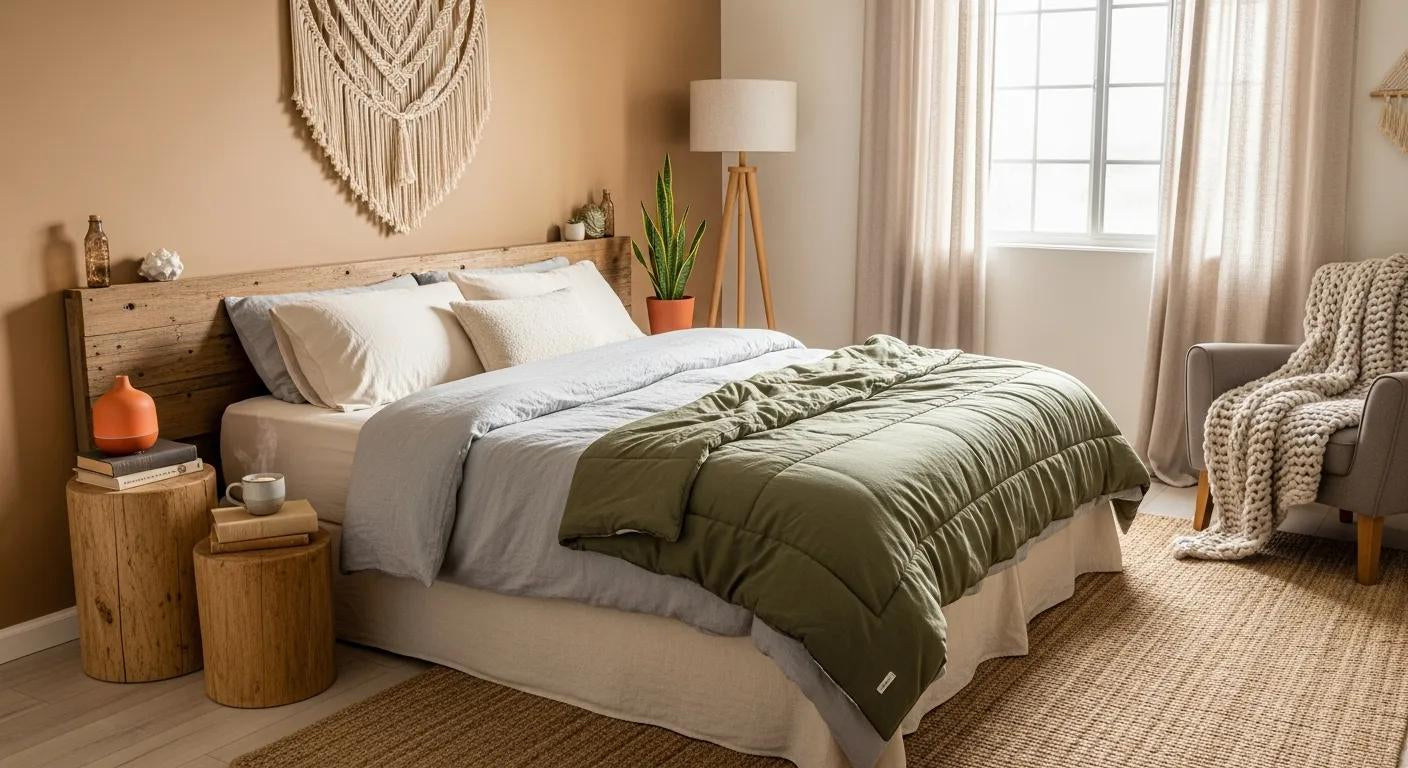
Sustainable weighted blankets — eco-friendly comfort that lifts your sleep and your space
Thoughtful design meets restorative touch with sustainable weighted blankets — they help you sleep better while adding calm, natural texture to your room. We'll explore what makes a weighted blanket genuinely sustainable, how Deep Touch Pressure Stimulation (DTPS) supports sleep and lowers anxiety, and simple styling tips for eco-conscious interiors. As an Australian-designed example, Adore Earth blends GOTS‑certified organic cotton, bamboo‑derived viscose and recycled glass bead filling in the Adorearth™ Weighted Blanket to balance comfort, conservation and modern style. Whether you want therapeutic benefits, a low-impact look, or both, this guide walks you through materials, certifications, weight and size choices, care advice and styling pointers so you can pick a blanket that performs and complements your home. Let's dive in for clear definitions, practical checklists and styling ideas to help you choose a sustainable weighted blanket that improves sleep and elevates your space.
What are sustainable weighted blankets — and why they matter
Sustainable weighted blankets give you therapeutic pressure while favouring eco-friendly fibres, low-toxicity fills and more responsible manufacturing. They matter because they reduce reliance on single-use synthetics, limit chemical residues next to skin and combine sleep benefits with a smaller environmental footprint. Beyond wellbeing, these blankets help pull an eco-minded room together through natural fibres and tactile finishes that age gracefully. Below we break down the key materials that define sustainability in this category and how to compare them for breathability, biodegradability and feel.
Sustainable weighted blankets offer three main advantages:
- DTPS benefits: gentle, even pressure that helps calm the body and improve sleep.
- Cleaner materials: lower chemical load for sensitive skin and better indoor air quality.
- Aesthetic harmony: natural textures and muted tones that suit eco-conscious interiors.
Which eco-friendly materials define sustainable weighted blankets?

The materials you choose determine breathability, temperature control and end‑of‑life impact. Organic cotton, bamboo‑derived viscose and Tencel‑style fibres each bring different strengths. GOTS‑certified organic cotton gives familiar softness and good airflow, with certification that covers farming and processing standards. Bamboo‑derived viscose and Tencel (Lyocell) wick moisture and feel cool to the touch, ideal for warmer sleepers. Recycled glass beads provide a non‑toxic, stable fill that avoids plastic microbeads. The short comparison below helps match feel and environmental attributes to likely use cases.
| Material | Key Attributes | Best-use Case |
|---|---|---|
| GOTS-certified Organic Cotton | Soft, breathable, lower chemical residues; better end‑of‑life options | Year‑round sleepers, sensitive skin, classic natural looks |
| Bamboo-derived Viscose | Very breathable, cooling, silky hand; renewable source, though processing varies | Hot sleepers, drapey modern covers, lightweight layers |
| Tencel (Lyocell) | Excellent moisture management, smooth, biodegradable, low‑impact closed‑loop production | Luxury feel, allergy-prone users, humid climates |
| Recycled Glass Beads (fill) | Inert, non‑porous, non‑toxic, consistent weight distribution | Durable alternative to plastic pellets; suitable for washable designs |
This comparison shows the trade-offs between tactile preference and ecological priorities. Next, we explain why independent certifications are useful when evaluating sustainable bedding.
How do certifications like GOTS and OEKO‑TEX verify ethical production?
Certifications give an independent check on fibre sourcing, chemical testing and workplace standards so you can trust product claims beyond marketing language. GOTS reviews organic fibre content plus environmental and social practices across production, signalling that farming and textile processing meet recognised organic and social criteria. OEKO‑TEX tests finished textiles for harmful substances to protect skin and indoor air. Together, these labels reduce the risk of greenwashing by showing a product meets measurable standards for lower toxicity and more responsible production.
For shoppers and brands alike, clear certification makes it easier to connect material choices with verified practices. Next, we look at how those choices translate into real sleep and anxiety benefits.
How do sustainable weighted blankets help sleep and reduce anxiety?
Sustainable weighted blankets combine gentle, evenly distributed pressure with breathable, low‑toxicity fabrics to help your nervous system relax without overheating or irritation. That mix — therapeutic pressure plus clean materials — often leads to better-perceived comfort at night and steadier sleep. Many of our customers find improvements in falling asleep and reductions in anxiety, especially when the blanket matches body weight and temperature needs. The sections below outline DTPS and explore how a sustainable blanket might help you.
The physiological benefits can be summarised as:
- Faster sleep onset and longer sleep through soothing pressure and less restlessness.
- Lowered evening arousal via reduced cortisol and increased calming neurotransmitters.
- Improved subjective sleep quality and fewer nighttime awakenings for many users.
Let's take a closer look at Deep Touch Pressure Stimulation and why it matters for anxiety relief.
What is Deep Touch Pressure Stimulation, and how does it ease anxiety?
Deep Touch Pressure Stimulation (DTPS) is the firm, evenly spread pressure that tells the nervous system it’s safe, nudging the body from a fight‑or‑flight state toward rest. This gentle pressure encourages the release of calming neurotransmitters and hormones — think serotonin and melatonin — while lowering stress hormones like cortisol. Many of our customers describe a grounded, cosy feeling, easier sleep onset and fewer night wakings when the blanket’s weight suits their body. Knowing how DTPS works helps you choose the right blanket and use it effectively.
What benefits do organic weighted blankets offer for sleep quality?
Organic, well‑made weighted blankets tend to deliver the same therapeutic effects as conventional models while cutting exposure to unwanted residues. Many people report improved sleep efficiency, reduced time to fall asleep and fewer awakenings when using correctly weighted blankets over time. For those with sensitive skin, organic covers can reduce irritation that otherwise disrupts sleep. In short, a sustainably made blanket can offer measurable sleep benefits while aligning with health and environmental priorities.
How can you style eco-friendly weighted blankets in your home?
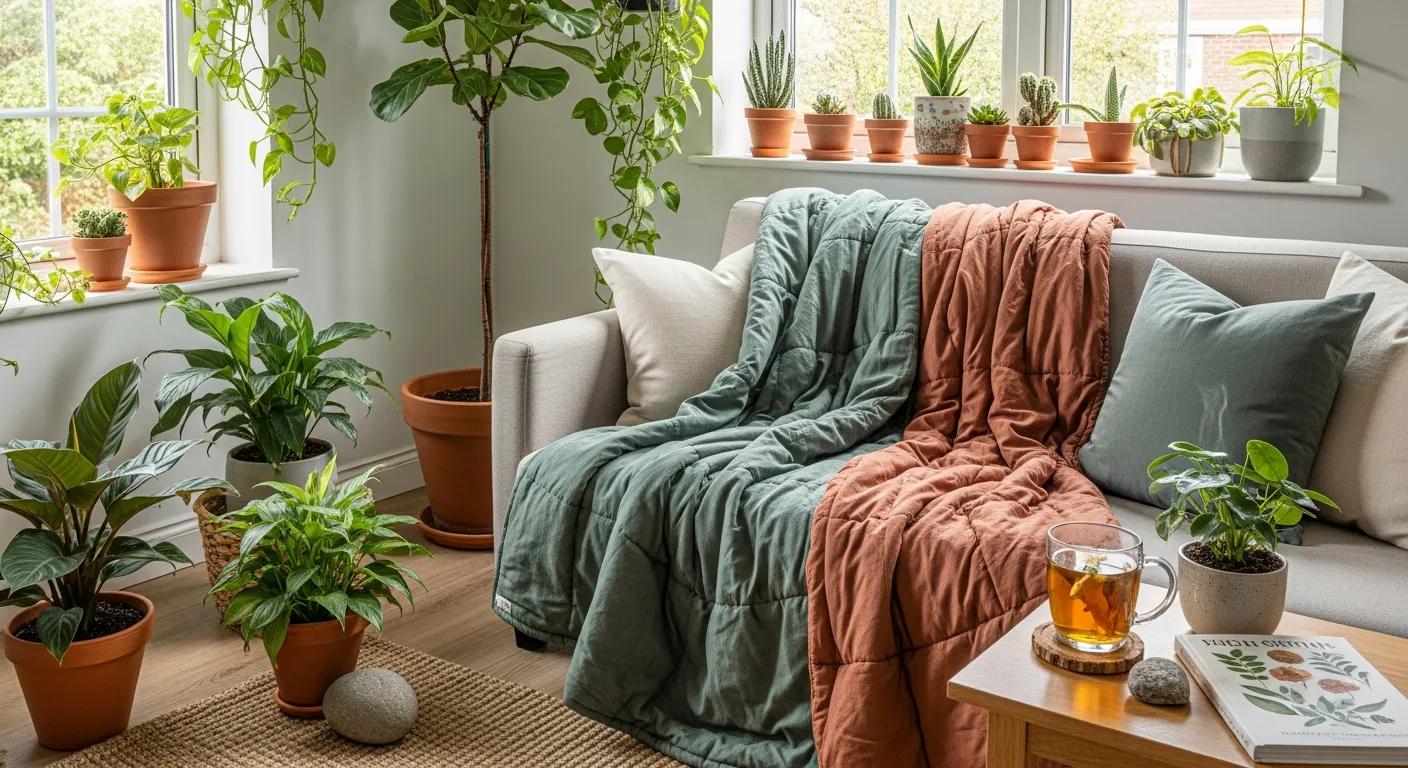
Styling a sustainable weighted blanket is about scale, texture and drape, while keeping performance in mind. Treat weight and weave as design elements: a fine quilted organic‑cotton blanket reads minimal and refined, whereas a chunky knit brings tactile warmth to bohemian or layered interiors. Place blankets folded over a sofa arm, at the foot of the bed or draped over a reading chair to create inviting visual anchors. The suggestions below pair designs with popular eco-friendly decor directions and offer colour and texture ideas to enhance a biophilic feel.
- Minimalist: neutral, single‑tone quilts in fine organic cotton for clean lines and subtle texture.
- Bohemian: chunky knits or textured weaves in earthy hues to emphasise layered tactility.
- Scandinavian: muted palettes with breathable Tencel or bamboo viscose for light, streamlined layering.
These visual approaches help you choose fabrics and colours that suit your room. The next section explores design choices that pair well with common eco styles.
Which blanket designs suit popular eco-friendly decor styles?
Choosing a design means balancing function with visual intent. Quilted organic cotton suits minimalist and Scandi interiors thanks to its refined lines and matte finish. Chunky natural‑fibre knits and woven textures work well in boho or rustic spaces where tactility and layering add depth. Contemporary eco interiors often favour drapey bamboo‑derived viscose for a sleek, plant‑friendly look that complements light woods and greenery. Matching fabric and finish to the room’s dominant textures ensures the blanket enhances — not competes with — existing decor.
Once you’ve chosen a style, consider colour and texture to complete a cohesive, eco-conscious scheme.
What colours and textures elevate an eco-conscious living space?
A nature‑inspired palette — soft greens, warm terracotta, stone greys and neutral beiges — creates a calm backdrop and keeps the blanket versatile through seasons. Texture is equally important: smooth, slightly lustrous bamboo viscose reads modern and cool, while matte organic cotton and knitted surfaces add visual warmth and tactile comfort. Mix textures — linen cushions, reclaimed timber, potted plants and a textured weighted blanket — to create depth without clutter. Swapping lighter and darker layers seasonally keeps the look feeling fresh and intentional.
Styling matters, but so does choosing the right blanket — the next section outlines the practical buying criteria.
What should you consider when buying a sustainable weighted blanket?
Picking a sustainable weighted blanket comes down to the correct weight and size, fabric choices for temperature and feel, certification checks and care practices that preserve lifespan and sustainability. Start with a weight guideline based on body weight, then refine by sleep position and warmth needs; breathable, moisture‑wicking fabrics suit hot sleepers, while denser organic cotton may suit cooler rooms. Look for independent certifications and non‑plastic fills like recycled glass beads, and favour removable covers or repairable construction to extend the product’s life. The checklist and table that follow make selection straightforward.
Use this checklist before you buy:
- Choose weight using the per cent-of-body-weight guideline and account for extra bedding layers.
- Pick a fabric that matches your temperature needs — bamboo viscose for cooling, organic cotton for all-around comfort.
- Verify certifications (GOTS, OEKO‑TEX) and prefer non‑plastic filling such as recycled glass beads.
- Check care instructions, removable covers and repairability to prolong product life.
- Match the design and colour to the room where the blanket will live for lasting aesthetic value.
How to select the right weight and size for comfort and effectiveness?
A practical rule of thumb is to choose a blanket that’s about 7–12% of the user’s body weight — enough pressure to be calming without feeling restrictive. For example, someone weighing 70 kg would generally start with a 5–8 kg blanket and adjust for personal preference or extra bedding. Bed size affects dimensions: single sleepers often choose smaller sizes to distribute pressure, while couples may prefer two blankets so each person has the correct weight. For children or people with medical needs, always seek personalised advice from a healthcare professional.
Below is a common mapping of bed/use size to recommended blanket weight and typical use cases.
| Bed/Use Size | Recommended Blanket Weight (kg) | Best for | Notes |
|---|---|---|---|
| Single / Twin | 4–8 kg | Single adult or child (with guidance) | Use the lighter range for smaller builds |
| Double / Full | 6–10 kg | Single adult with a larger build or shared lightweight sleepers | Consider heat regulation needs |
| Queen | 8–12 kg | Most single adults or couples use separate blankets | Balance size with partner preferences |
| King | 9–14 kg | Larger beds or heavier builds; couples may prefer two blankets | Separate blankets often improve individual comfort |
How should you care for your sustainable weighted blanket?
Keeping a sustainable weighted blanket in good condition means following the manufacturer’s care instructions, using removable covers, spot‑cleaning and repairing small issues promptly. Machine‑washable covers reduce how often you need to wash the fill insert; when washing the insert is necessary, choose gentle cycles and air‑dry to protect fibres and filling. Fix small tears or loose quilting quickly and consider repurposing filling or donating intact covers at the end of life to keep materials out of the landfill. Regular care and minor repairs extend both therapeutic performance and sustainability.
Good care practices pair naturally with choosing brands that support repair, clear care guidance and responsible policies.
Why choose Adore Earth’s sustainable weighted blankets?
Adore Earth focuses on Australian‑designed, sustainably minded home textiles. The Adorearth™ Weighted Blanket combines responsibly sourced fibres and fills to balance comfort, conservation and contemporary design. We favour GOTS‑certified organic cotton and bamboo‑derived viscose for breathable, low‑toxicity covers, and use recycled glass beads as a durable, non‑plastic fill for consistent weight distribution. Our approach aligns DTPS benefits with transparent material choices and designs that suit nature‑inspired interiors. For shoppers who want material clarity and a confident purchase, our customer-friendly policies are designed to make trying a sustainable weighted blanket simple and give you peace of mind.
| Feature | What it Means | How Adore Earth Fulfils It |
|---|---|---|
| Responsible Materials | Lower chemical load and better end‑of‑life options | Uses GOTS‑certified organic cotton and bamboo‑derived viscose |
| Non-toxic Fill | Safe, stable, weighted performance without plastic microbeads | Employs recycled glass bead filling as an inert alternative |
| Ethical Production | Supply chain practices that consider social and environmental impact | Positions products as ethically sourced with eco-conscious production |
| Customer Assurance | We offer customer-friendly policies to ensure a confident purchase. | We provide customer-friendly policies to support your purchase. |
How does Adore Earth support ethical production and carbon offset?
Adore Earth builds products around ethical sourcing and reduced environmental impact, combining organic and recycled materials with manufacturing choices that lower embodied carbon where possible. We outline commitments to responsible sourcing and carbon‑offset measures as part of our sustainability story, so customers can see how materials and processes aim to reduce chemical exposure and embodied impacts compared with conventional textiles. These choices support both the product’s therapeutic role and its alignment with broader conservation values.
What customer benefits make purchasing with us a confident choice?
To make trying a sustainable weighted blanket straightforward, Adore Earth offers customer-friendly policies designed to support your purchase. These policies give you time to judge DTPS benefits, temperature and fabric feel in your own home. We aim to remove any barriers to testing a sustainably made option. These policies — together with transparent material claims like GOTS‑certified cotton and recycled glass bead fill — help you make an informed decision with peace of mind.
That wraps up the practical and stylistic guidance to help you choose a sustainable weighted blanket that boosts sleep, eases anxiety and complements your home.
Frequently Asked Questions
What is the ideal weight for a sustainable weighted blanket?
Most people find a blanket that equals about 7%–12% of their body weight works well enough pressure to feel calming without restricting movement. For example, someone who weighs 70 kg would typically start with a 5–8 kg blanket and adjust from there based on comfort, sleep position and whether extra bedding is used.
How do I know if a weighted blanket is suitable for children?
For children, always check with a healthcare professional before using a weighted blanket. A common guideline is around 10% of the child’s body weight (plus a small extra for comfort), but safety, age and supervision are essential. Choose blankets specifically designed for children, with secure stitching and non‑toxic materials, and supervise use to ensure safety.
Can sustainable weighted blankets help with conditions like ADHD or autism?
Many people with ADHD or autism report benefits from the calming pressure of weighted blankets. DTPS can provide a grounded, soothing sensation that may reduce anxiety and improve sleep for some users. That said, individual responses vary, so consult a healthcare professional for personalised guidance and to ensure safe use.
What are the environmental benefits of choosing a sustainable weighted blanket?
Choosing a sustainable blanket helps reduce reliance on synthetic fibres and harmful chemicals by favouring materials like organic cotton and bamboo‑derived viscose. Responsible production often includes better labour practices and lower embodied impacts. Selecting long‑lasting, repairable designs and recyclable fills also keeps textiles out of landfills and supports a more circular textile approach.
How can I ensure the longevity of my sustainable weighted blanket?
Follow the care instructions closely: wash removable covers regularly, only wash the insert when necessary using gentle cycles, and air‑dry where possible. Repair small tears and loose quilting promptly, and use covers to protect the fill. At the end of life, consider repurposing the filling or donating covers to extend the material life and reduce waste.
Are there specific brands known for their sustainable weighted blankets?
Yes — some brands focus on sustainability in their weighted blankets. Adore Earth, for example, emphasises GOTS‑certified organic materials and recycled fillings to combine comfort with eco credentials. When researching brands, look for certifications like GOTS and OEKO‑TEX, clear material information and customer reviews to find a reputable, sustainability‑minded option.
