





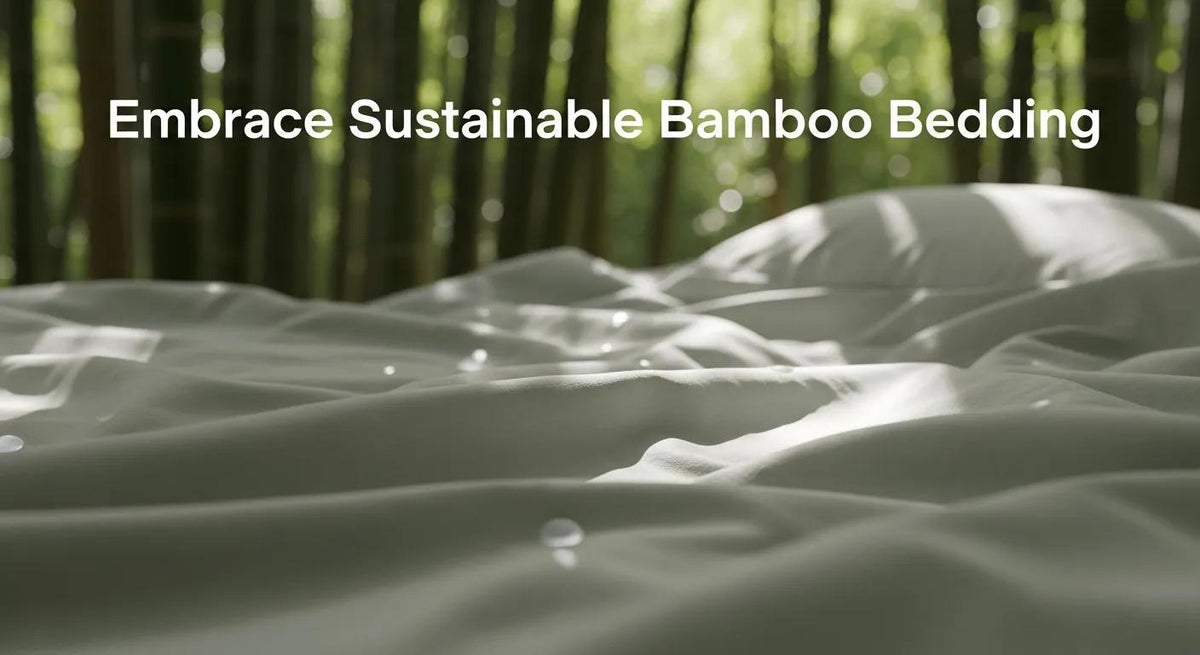
Sustainable bamboo bedding has gained traction among environmentally conscious buyers because it combines comfort with measurable environmental advantages. This article examines bamboo bedding's eco‑friendly properties, relevant certifications, and practical suitability for commercial use. As demand for sustainable alternatives increases in homes and businesses, bamboo bedding presents a viable solution that balances comfort and lower environmental impact. The following sections outline its benefits, environmental footprint, and applications in hospitality and other commercial settings.
Benefits:
Bamboo bedding delivers several benefits that appeal to purchasers seeking sustainable products. The primary advantages are outlined below.
Eco-Friendly: Bamboo is a highly renewable resource that grows quickly without the need for harmful pesticides or fertilizers.
Moisture-Wicking: Bamboo fibres naturally wick moisture away from the body, keeping you dry and comfortable throughout the night.
Hypoallergenic: Bamboo bedding is resistant to dust mites and other allergens, making it an excellent choice for those with sensitivities.
Adore Earth specializes in supplying high-quality bamboo bedding products that reflect these benefits, enabling customers to obtain both comfort and verified sustainability.
What Are the Environmental Benefits of Bamboo Bedding?
Bamboo bedding delivers comfort while offering measurable environmental advantages. Bamboo cultivation requires substantially less water than conventional cotton farming. In addition, bamboo plants sequester more carbon dioxide and release more oxygen than many other species, contributing positively to the atmosphere.
How Does Bamboo Bedding Contribute to Eco-Friendly Bedding Materials?
Bamboo supports eco-friendly bedding through sustainable cultivation practices. The plant matures rapidly and can be harvested without killing it, allowing regrowth. This approach reduces deforestation and supports biodiversity. Production typically involves fewer chemicals than conventional cotton, which lowers environmental pollution.
Which Sustainability Certifications Ensure Bamboo Bedding Quality?
Several certifications verify the quality and sustainability of bamboo bedding. Prominent examples include those listed below.
OEKO-TEX Standard 100: This certification guarantees that the fabric is free from harmful substances and safe for human use.
GOTS Certification: The Global Organic Textile Standard (GOTS) ensures that the bamboo is sourced from organic farms and that the entire production process adheres to strict environmental and social criteria.
These certifications provide buyers with verifiable assurance regarding the safety and sustainability of their bamboo bedding selections.
The significance of certifications, notably OEKO-TEX Standard 100, is supported by studies on their role in communicating product sustainability to consumers.
OEKO-TEX® Standard 100: Textile Sustainability & Eco-Labels
As demand for sustainable products increases across industries, eco-labels serve to communicate a product's sustainability credentials to environmentally aware consumers. This paper highlights the significance of OEKO-TEX® STANDARD 100 in improving company compliance with international standards and in appealing to eco-conscious customers. The findings emphasize certification's role in ensuring product safety from harmful substances, promoting supply-chain transparency, and supporting sustainable practices.
Enhancing environmental standards in textiles: the role of OEKO-TEX® standard 100, 2024
Why Is Bamboo Bedding Ideal for Commercial Sustainable Bedding Projects?
Bamboo bedding is well suited to commercial sustainable projects such as hotels and resorts because of its rapid renewability and comparatively low environmental impact. The hospitality sector is increasingly prioritising sustainability, and bamboo bedding provides a practical option that aligns with those priorities.
Research further highlights the wider adoption of sustainable practices within hotels to reduce their environmental footprint.
Sustainable Hotel Practices: Linen & Green Certifications
A global trend has emerged as hotels implement programs to reduce resource use and overall environmental impact. The hospitality industry now commonly adopts measures such as recycling, energy-efficient lighting, towel reuse programs, linen exchange initiatives, Green Certifications, and alternative methods for providing bathroom amenities to operate more sustainably.
An investigation of sustainable environmental practices and consumer attitudes & behaviors toward hotel bathroom amenities, 2010
How Does Bamboo Bedding Enhance Hospitality Environments Like Hotels?
In hospitality settings, bamboo bedding improves guest comfort through enhanced breathability and moisture management. Its moisture-wicking properties assist temperature regulation to promote restful sleep. The hypoallergenic characteristics also make it suitable for guests with allergies or sensitivities.
What Are the Durability and Maintenance Advantages of Bamboo Sheets for Hotels?
Bamboo sheets are noted for durability and low maintenance. They resist excessive wrinkling and fading and retain appearance after repeated laundering. This longevity reduces replacement frequency and lowers operational costs for hotels. Care is straightforward, typically requiring a gentle wash cycle and low-heat drying or air drying.
What Are the Key Advantages of Bamboo Fabric Compared to Traditional Materials?
When compared to traditional materials, bamboo fabric demonstrates several clear advantages. It is generally softer and more breathable than cotton, which contributes to improved perceived sleep quality.
How Do Hypoallergenic and Moisture-Wicking Properties Benefit Users?
Bamboo fabric's hypoallergenic nature supports a healthier sleep environment, which benefits individuals with sensitive skin or allergies by reducing irritation. Its moisture-wicking performance keeps users dry and helps limit the conditions in which mold and bacteria can proliferate.
Textile studies further confirm bamboo's strong moisture-management capabilities, which contribute materially to user comfort.
Bamboo Fabric: Moisture Management & Comfort Properties
A study developed a tri-layer knitted structure using bamboo, polypropylene, hollow polyester, and polyester staple fiber yarns to evaluate moisture management characteristics. The configuration and material types affect thermal perception. Results indicated that fabric constructions featuring bamboo outer layers combined with hollow polyester layers showed improved moisture regulation, delivering a high level of comfort suitable for warm-weather and athletic applications.
Study of moisture management properties of tri-layer knitted fabrics made from hollow polyester, bamboo, spun polyester and polypropylene, R Kumar, 2024
In What Ways Does Bamboo Fabric Offer Superior Comfort and Longevity?
Bamboo fabric provides notable comfort and longevity due to its natural properties. The fibres offer a soft hand against the skin. Additionally, resistance to pilling and effective temperature regulation contribute to an extended service life, making bamboo bedding a prudent investment.
How Do Case Studies Demonstrate the Effectiveness of Bamboo Bedding in Commercial Fit-Outs?
Case studies indicate that integrating bamboo bedding into commercial fit-outs can enhance guest satisfaction and improve sustainability ratings. Numerous hotels that adopted bamboo bedding report favorable guest feedback regarding comfort and environmental responsibility.
What Successful Projects Showcase Bamboo Bedding Integration?
Several projects demonstrate successful integration of bamboo bedding in hospitality settings. Eco-focused hotels have incorporated bamboo bedding as part of sustainability commitments and have observed increased bookings from environmentally minded travelers. These examples illustrate market demand for sustainable options and positive effects on brand reputation.
How Do Client Testimonials Reflect Customer Satisfaction and Guarantees?
Client testimonials frequently report high customer satisfaction with bamboo bedding. Guests commonly note improved sleep quality and appreciation for a hotel's sustainability efforts. Such feedback supports the value of bamboo bedding in enhancing the overall guest experience.
Frequently Asked Questions
What is the lifespan of bamboo bedding compared to traditional materials?
Bamboo bedding generally has a longer lifespan than conventional cotton. Its natural resistance to pilling and fading helps it maintain quality after multiple washes. With appropriate care, bamboo sheets can last several years, which reduces replacement frequency and contributes to less waste.
Can bamboo bedding be used in all climates?
Bamboo bedding is versatile and appropriate for all climates. Its moisture-wicking properties assist temperature regulation, helping users stay cool in warm conditions and retain warmth in cooler conditions. The fabric's breathability supports comfortable, year-round use.
How should bamboo bedding be washed and cared for?
To preserve bamboo bedding quality, launder in cold water on a gentle cycle. Avoid bleach and harsh detergents that can damage fibers. Tumble dry on low heat or air-dry to extend fabric life. Following these care practices helps maintain softness and comfort.
Is bamboo bedding suitable for sensitive skin?
Bamboo bedding is hypoallergenic and resistant to dust mites, which makes it well suited to individuals with sensitive skin or allergies. Its natural properties reduce irritation and can improve sleep quality and allergy symptoms for many users.
What impact does bamboo bedding have on the environment?
Bamboo bedding typically has a lower environmental impact than conventional cotton bedding. Bamboo grows quickly, requires minimal water, and generally does not need pesticides. Bamboo plants also sequester more carbon dioxide and release more oxygen than many other species. Selecting bamboo bedding supports more sustainable practices and can help reduce carbon footprint.
Are there any drawbacks to using bamboo bedding?
There are a few potential drawbacks. Bamboo bedding can be more costly than traditional cotton options, and the fabric may wrinkle if not cared for properly. Many users conclude that the comfort and sustainability advantages outweigh these considerations.
Is Bamboo Bedding Truly Sustainable and Certified?
Bamboo bedding is considered sustainable when sourced from certified suppliers. Certifications such as OEKO-TEX and GOTS verify that bamboo is grown and processed in an environmentally responsible manner. This certification-based approach makes bamboo bedding a responsible choice for eco-conscious buyers.
How Does Bamboo Bedding Compare to Cotton in Performance and Eco Impact?
Bamboo bedding outperforms cotton in several respects, notably environmental impact. Bamboo requires less water and typically no pesticides. In terms of performance, bamboo bedding is generally softer, more breathable, and offers superior moisture-wicking compared with cotton, enhancing overall comfort.
Different benefits of bamboo bedding can be summarised in the following table:
Benefit |
Description |
Impact Level |
|---|---|---|
Eco-Friendly |
Grows quickly with minimal resources |
High |
Moisture-Wicking |
Keeps users dry and comfortable |
High |
Hypoallergenic |
Reduces allergens and irritants |
Medium |
