




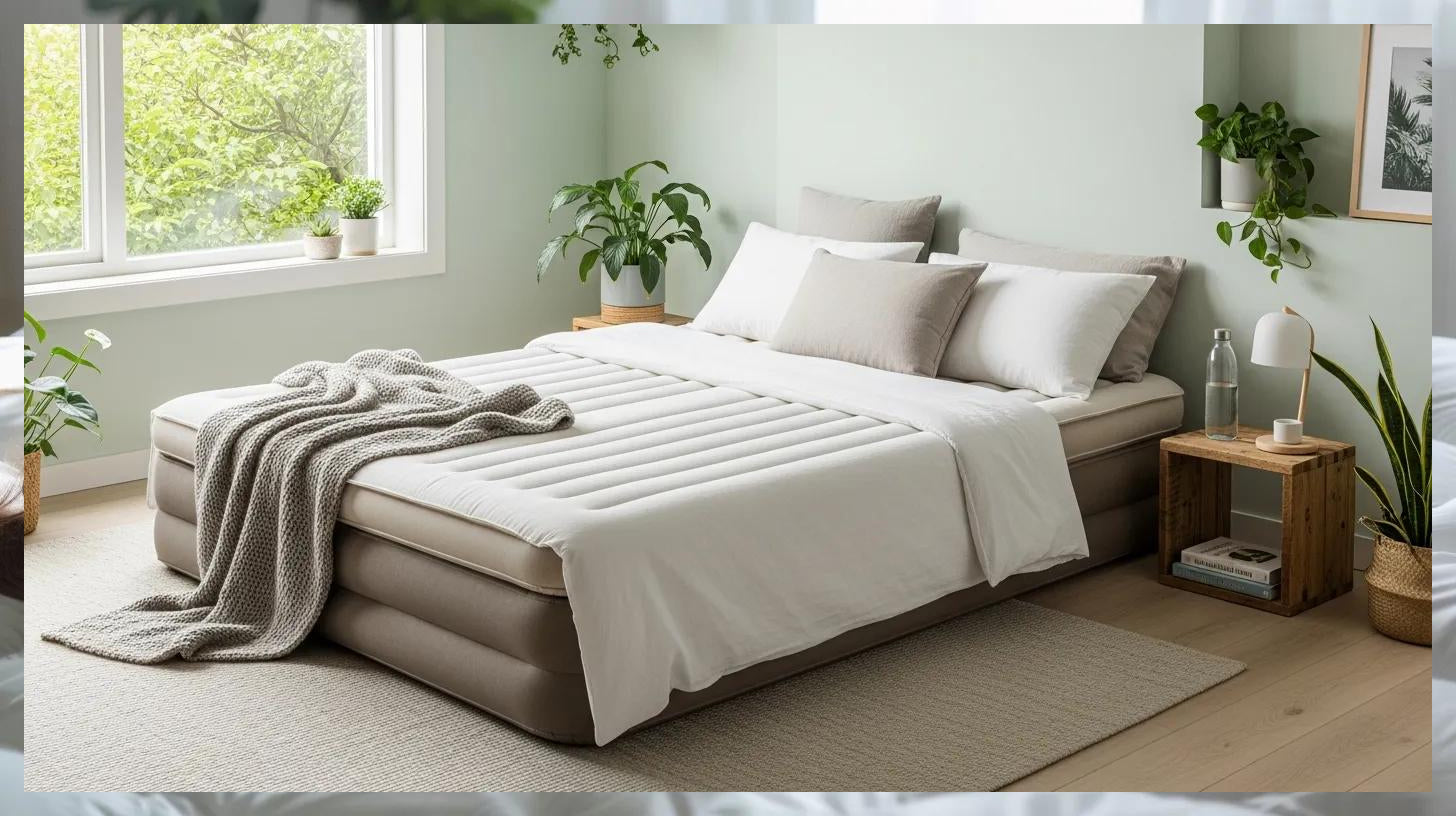
Eco-friendly air mattresses that support sustainability — your guide to non-toxic, durable and recyclable sleep solutions
An eco-friendly air mattress is an inflatable sleeping surface made to reduce harm to people and the planet through non-toxic materials, robust construction and clear end-of-life options. This guide explains why choosing a PVC-free, non-toxic air bed matters for indoor air quality and waste reduction, and lays out practical choices for Aussie shoppers looking for genuinely sustainable inflatables. At Adore Earth, we centre comfort, care and conservation. While our current focus is on organic bamboo bedding, we're committed to exploring how an eco-first air mattress range could meet our strict sustainability standards. You’ll learn what makes an air bed sustainable, how TPU stacks up against PVC, the main types available, sensible recycling and disposal options, and a simple buying checklist.
What makes an air mattress truly eco-friendly and sustainable?

An air mattress earns the eco-friendly label when its materials, production, certifications, lifespan and end-of-life options reduce toxic exposure and waste while supporting circularity. Good products avoid PVC and phthalates, favour TPU or recycled polymers, and are manufactured to limit VOC emissions. Durable seams, easy repairs and clear product support cut replacement rates, and transparent supply chains or third‑party testing let you verify claims. Let's dive into the main material choices and why independent testing is so important for a safer, longer‑lasting inflatable in your home.
So, what truly makes an air mattress eco-friendly? Here are the key features to look for:
- Material composition: PVC- and phthalate-free; made from TPU, recycled polymers or with natural fabric covers.
- Certifications and testing: OEKO‑TEX, independent VOC testing or equivalent third-party verification.
- Design for longevity: Strong welds, repair kits, replaceable valves and honest product support.
- End-of-life planning: Recyclability, take-back programmes or clear mechanical recycling routes.
These points make it easier to compare options, and we'll break down the materials below.
Here’s a short comparison of common materials and the main trade-offs to consider.
| Material Type | Key Attribute | Typical Environmental/Health Impact |
|---|---|---|
| PVC (traditional) | Low initial cost, flexible | Often contains phthalates and can release VOCs; hard to recycle cleanly |
| TPU (thermoplastic polyurethane) | PVC-free, flexible | Usually lower VOCs, more amenable to mechanical recycling; generally longer lasting |
| Recycled polymers | Circular feedstock | Reduces need for virgin plastic; recyclability depends on polymer purity and local facilities. |
| Natural fabric covers | Breathable, biodegradable | Boosts comfort, reduces synthetic skin contact and can aid composting when fully natural. |
Your material choice is central to sustainability: opting for PVC-free, recyclable polymers and natural covers significantly lowers toxic exposure and landfill impact.
Which materials define non-toxic and PVC-free air mattresses?
TPU, recycled polyethylene blends and natural fabric covers are the main materials that define non-toxic, PVC-free inflatables. TPU is a family of thermoplastic elastomers that can be formulated without phthalates and typically emits fewer VOCs than PVC, which makes it more suitable for indoor sleeping products. Recycled polymers cut demand for virgin plastics and support circular economy goals, though their actual recyclability depends on contamination levels, polymer type and local collection infrastructure. Natural covers, such as organic cotton or bamboo, add breathability and a biodegradable layer that improves comfort and reduces synthetic surface area against the skin. Knowing these differences helps you balance health and lifecycle impact when choosing a sustainable air bed.
We believe in safer alternatives to traditional plasticisers, helping products like air mattresses become genuinely non-toxic.
How do certifications like OEKO‑TEX help verify safety and sustainability?
Certifications such as OEKO‑TEX Standard 100 and recognised material-testing schemes offer independent verification, giving you peace of mind about harmful substances and production practices. OEKO‑TEX focuses on textiles and checks fabrics and finishes for chemicals of concern, which matters for removable covers and quilted tops. Similar schemes test foams and emissions; their core value is independent lab testing and limits on dangerous substances. When shopping for an eco-friendly air mattress, ask sellers for exact certification names or lab summaries — specific, verifiable claims are far better than generic labels like “non-toxic.” These checks are important for avoiding phthalates, heavy metals and high VOCs in inflatable sleep surfaces.
The wider textile industry also stresses sustainable practices and certification as essential for consumer safety and environmental responsibility.
At Adore Earth, our approach to bedding — organic, tested textiles and transparent standards — would naturally extend to any eco-focused inflatable range, with a focus on non-toxic materials and verifiable testing, ensuring you get the best.
How does thermoplastic polyurethane compare with traditional PVC in air mattresses?
TPU stands apart from PVC in its chemistry, recyclability, emissions, and performance, making it a superior choice for PVC-free air beds. TPU refers to thermoplastic elastomers that can be made without phthalate plasticisers and, where facilities exist, are more straightforward to recycle mechanically than PVC.
The table below summarises key environmental and practical differences.
| Polymer | Environmental Attribute | Performance/Practical Impact |
|---|---|---|
| PVC | May contain phthalates; limited recyclability | Can off-gas VOCs; may stiffen or crack over time |
| TPU | Typically phthalate-free; more recyclable | Offers better elasticity, a lower odour profile and improved puncture resistance |
| Recycled TPU blends | Lower virgin resource use | Recyclability depends on local collection and remelting infrastructure |
What environmental benefits does TPU offer over PVC?
TPU generally produces fewer hazardous by-products during use and is more compatible with mechanical recycling than PVC, which often needs complex dechlorination or ends up downcycled. TPU’s chemistry lets manufacturers avoid phthalate plasticisers linked to health concerns, and its durability reduces how often a mattress needs replacing. In practice, the environmental gain comes from lower toxic emissions, better end-of-life options and longer service life. Remember that actual outcomes depend on manufacturing practices and local recycling availability, so we encourage you to ask brands about recycled-content percentages and take-back schemes when assessing sustainability claims.
Why is TPU considered durable and comfortable for sustainable air beds?
TPU’s molecular makeup gives it elasticity and tensile strength, which improves puncture and abrasion resistance in chambers and seams. That durability means fewer replacements — a significant sustainability win. TPU also tends to have less odour than some PVC formulations, helping indoor air quality for people sensitive to VOCs. From a comfort perspective, TPU holds pressure consistently and supports reliable pressure distribution over time. Those traits make TPU a practical choice when you want comfort, longevity and lower environmental impact in one package.
What are the best types of eco-friendly air mattresses available in Australia?
Different use cases call for different eco-conscious designs: TPU-based guest beds for home comfort, recycled-material camping mattresses built for rough use, insulated sleeping mats for cold-weather camping and compact travel inflatables for minimal pack size. Each type prioritises different features — multi-zone support and thicker chambers for guest beds, puncture resistance and low weight for camping, thermal insulation for cold nights and quick inflation plus small packed volume for travel. When choosing, consider the Australian climate, how often you’ll use the mattress and local recycling options. Let's look at how recycled content supports circularity and which models are best for camping or guest use.
- Guest and home inflatables: Aim for multi-zone support, thicker chambers and removable natural covers for comfort and hygiene.
- Camping eco mattresses: Look for TPU construction, low pack weight and insulating layers for colder conditions.
- Travel and compact models: Prioritise fast inflation, small packed volume and reliable valve systems.
Knowing these categories helps you match features to lifestyle needs and choose the right materials and design trade-offs.
How do recycled-material air mattresses support circular economy principles?
Air mattresses made with recycled polymers use reclaimed feedstock — often post-consumer or post-industrial — to cut demand for virgin plastic and keep materials in use. When manufacturers design for repair, offer take-back programmes or use mechanically recyclable polymers, their products align with circular principles by extending useful life and enabling material recovery. Look for transparent recycled-content figures, clear information about the source stream and evidence of take-back or recycling programmes. The circular benefit is strongest when recyclability is paired with durability and easy repair rather than disposal.
Which non-toxic inflatable beds are best for camping and guest use?
For camping, choose TPU models that balance puncture resistance with light weight and include insulation for colder nights; valves should work with efficient pumps. For guest use, favour thicker chambers or multilayer constructions for better weight distribution, plus removable natural-fibre covers for comfort and cleaner sleeping surfaces. Portability, pump type and seam construction are trade-offs — lighter camping mats may be less plush, while guest beds often weigh more but feel more supportive. Match the primary use to these trade-offs to find the best fit.
Adore Earth’s philosophy — comfort, care and conservation — means any inflatable range we developed would feature TPU construction, natural covers, and robust support for longevity, all designed to meet your sustainability expectations.
How can you responsibly dispose of or recycle your old air mattress?
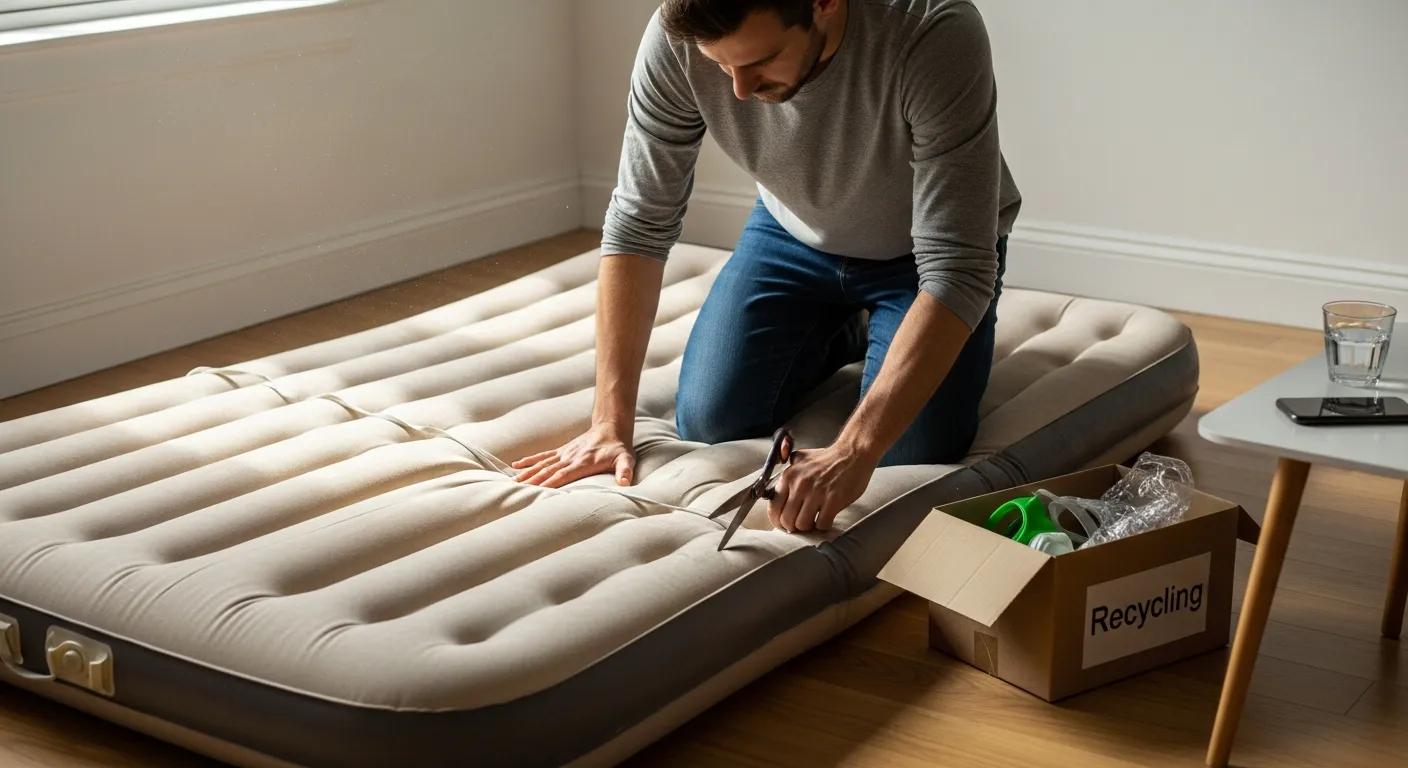
Start with repair and reuse, then move to recycling or creative upcycling if recycling isn’t available. First, check whether punctures or valve faults can be fixed with a manufacturer kit or a quality patch — repairing is the most sustainable choice. If repair isn’t possible, find specialist recyclers or your council’s bulky-waste service that accepts separated components, and remove any fabric covers for textile recycling or donation where accepted. The practical steps below help you retire an inflatable without needlessly sending materials to the landfill.
- Try to repair first: Use a patch kit or professional seam repair to extend the mattress’s life.
- Separate and recycle textiles: Remove covers and pass natural fabrics to textile recycling or charity donations if suitable.
- Find specialist recyclers: Look for mattress or polymer recyclers that accept TPU or mixed-material inflatables.
- Use bulky-waste collection only when necessary: Check your local council’s guidance to avoid landfill as a first option.
These steps prioritise repair and material separation to maximise circular outcomes. Let's look at recycling and upcycling options in more detail.
What are practical recycling and upcycling options for air mattresses?
Mechanical recycling for TPU and compatible thermoplastic blends typically involves shredding, washing and remelting the material into new products; some facilities can also separate and recycle fabric covers. Where industrial recycling isn’t available, repurposing the material as outdoor ground sheets, garden liners or pet bedding keeps it in use and delays landfill. Small DIY projects — turning material scraps into cushions or insulating pads — can work at home, but avoid placing mixed synthetic pieces directly into soil. Don’t assume curbside recycling accepts inflatable polymers; contamination and mixed materials often stop effective recycling unless your local authority explicitly lists them.
Where can Aussie consumers find specialist mattress recycling facilities?
Start with your local council’s bulky waste pages and search for private mattress recyclers or take-back schemes in larger urban areas. When you contact recyclers, ask which polymer types they accept, whether they require the cover to be removed and what fees apply; some services collect for a reasonable amount, others require drop-off. Look for recyclers that explicitly handle thermoplastic materials and can show evidence of mechanical recycling or material recovery.
Prepare the mattress by deflating, drying and — where possible — removing covers to make acceptance easier and to clarify the material streams for each part.
How to choose the right sustainable air mattress: buying guide
Choosing a sustainable air mattress means considering material, certifications, repairability, and intended use — together these predict long-term environmental performance and your sleep quality. Start by prioritising PVC-free materials (TPU or high-quality recycled polymers), then check for textile certifications and low-VOC testing. Look for manufacturer repair kits, durable valves, welded seams and our commitment to lasting quality: repairability and strong construction reduce lifetime environmental cost.
The table below standardises key features so you can compare models at a glance.
| Feature | Why it matters | How to evaluate |
|---|---|---|
| Material type | Determines toxicity and recyclability | Seek "TPU", "PVC-free" or clear recycled-content claims |
| Certifications | Validates low-toxicity claims | Ask for exact certification names and testing summaries |
| Repairability | Extends usable life | Look for patch kits, replaceable valves and seam repair options |
| Product Support | Shows our commitment to quality | Look for products designed for lasting performance and support. |
This checklist gives a practical framework; the following tips show what to prioritise when reading reviews and product pages.
- Material and coatings: Check for explicit PVC-free statements and request phthalate and VOC test results where possible.
- Construction: Inspect welds, seams and valve quality — well-executed welds reduce leak risk.
- Cover and comfort: Natural-fibre covers (organic cotton or bamboo) improve breathability and biodegradability.
- Aftercare: Availability of repair kits, spare valves and helpful customer service prolongs life.
These criteria let you narrow choices by use case — camping, guest sleeping or everyday home use. Below, we list features to rate a PVC-free model.
What features should you look for in a PVC-free air bed?
A strong PVC-free air bed pairs a TPU or verified recycled‑polymer chamber with welded seams, a high-quality inflation valve and, where possible, an organic or natural-fibre cover. Valve reliability matters for holding pressure and avoiding micro-leaks; choose a valve design that works with common pumps. Welded seams are preferable to stitched seams because they reduce leak paths — look for reinforced areas and transparent seam testing. The availability of repair kits and our commitment to lasting quality indicate a brand’s seriousness about longevity and sustainability.
When comparing models, consider scoring features on a simple 1–5 scale to balance portability, comfort and repairability.
Which sustainable air mattress models have the best reviews in Australia?
Rather than naming individual models here, follow this approach: prefer independently verified user feedback on durability, check material claims against lab tests or certifications, and read reviews that test long-term performance in varied conditions. Look for reports highlighting puncture resistance, low odour and seam integrity — these are strong indicators of sustainability. Independent test reports and verified buyer reviews give the best insight into real-world longevity; product pages should also state materials and repair options clearly.
At Adore Earth, our sustainability-first stance means we always recommend prioritising material transparency and repairable design when comparing new eco-friendly air mattresses.
This guide brings together material definitions, certification advice, TPU vs PVC comparisons, category recommendations for Aussie buyers, responsible disposal steps and a practical buying checklist to help you choose an eco-friendly air mattress that reduces toxic exposure and supports circular outcomes.
Frequently asked questions
What are the key benefits of using TPU over PVC in air mattresses?
TPU (thermoplastic polyurethane) offers several advantages over PVC. It is typically phthalate-free, lowering health risks associated with certain plasticisers. TPU also has stronger mechanical properties — better elasticity and puncture resistance — which improves durability. And where infrastructure exists, TPU is more amenable to mechanical recycling than PVC, giving better end-of-life options. Together, these traits make TPU a more sustainable pick for those who care about their health and the planet.
How can I identify eco-friendly air mattresses when shopping?
Look for clear, specific indicators: the material used, independent certifications and open manufacturer information. Prioritise TPU or verified recycled polymers and check for OEKO‑TEX or similar test results. Ask about repair kits and our commitment to lasting quality — brands that support repair and stand behind their products are more likely to offer genuinely sustainable options.
What should I consider when choosing an air mattress for camping?
For camping, focus on weight, durability and insulation. Choose TPU-based models that are lightweight and puncture-resistant, and pick an insulated option for colder nights. Make sure the valve fits efficient pumps. Balancing pack size with comfort and ruggedness will help you find the right camping mattress.
Are there specific brands known for sustainable air mattresses?
Many brands are beginning to prioritise sustainability, but the best approach is to check material statements, certifications, and independent reviews rather than relying on brand reputation alone. Look for companies that clearly list materials (TPU or recycled polymers), publish testing results, and offer repair or take-back options, just like we do at Adore Earth.
What are the best practices for maintaining an eco-friendly air mattress?
Regularly check for leaks and patch them promptly using manufacturer-recommended kits. Store your mattress in a cool, dry place out of direct sunlight to avoid material breakdown. Clean with mild soap and water — avoid harsh chemicals. These simple steps extend its lifespan and reduce the need for replacement, saving you money and helping the planet.
How can I ensure proper recycling of my old air mattress?
Start by attempting a repair. If that’s not possible, search for local recycling facilities that accept inflatable mattresses or specific polymer types. Remove fabric covers for textile recycling if you can. Check your council’s bulky-waste guidance to avoid sending items to landfill unnecessarily.
What are the environmental impacts of traditional air mattresses?
Traditional air mattresses made from PVC can involve harmful chemicals during production and may release VOCs while in use. PVC is challenging to recycle and can end up in landfill, and phthalate plasticisers used in some formulations carry health concerns. Switching to TPU or recycled alternatives helps reduce these impacts and supports a more sustainable lifestyle.
